UEW Chemistry Festival Inspires Pupils to Explore Science for a Better Planet


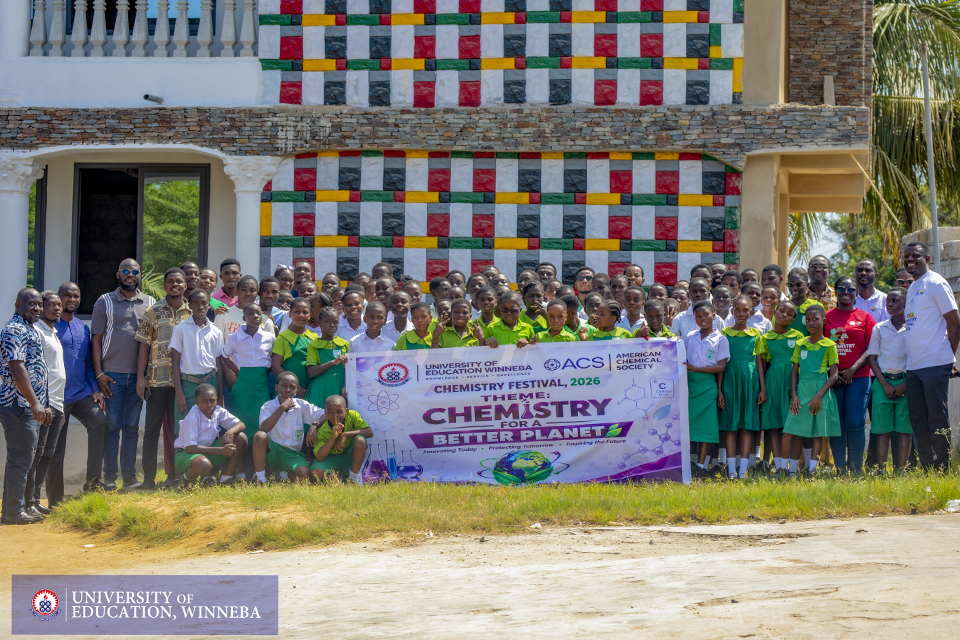
The Department of Chemistry Education of the University of Education, Winneba (UEW) has engaged Basic Six and Junior High School pupils of Synclair International School in practical chemistry activities to stimulate their scientific curiosity and promote environmental responsibility.
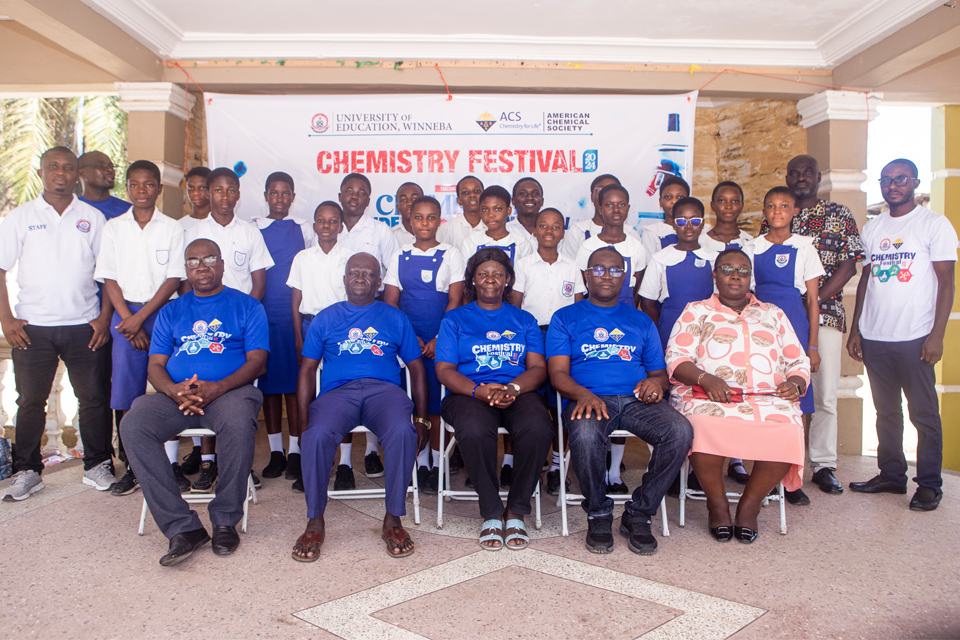
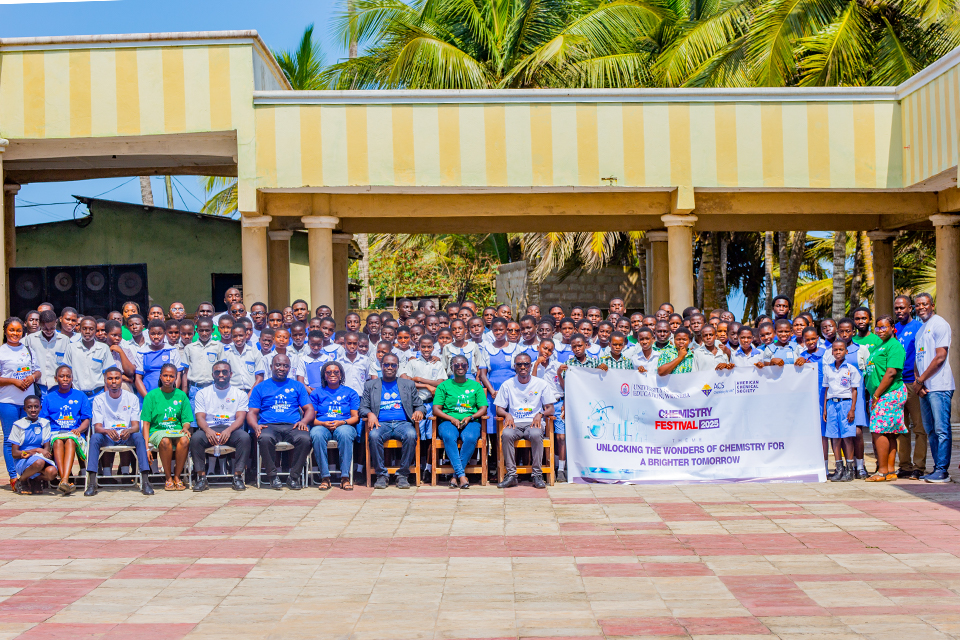
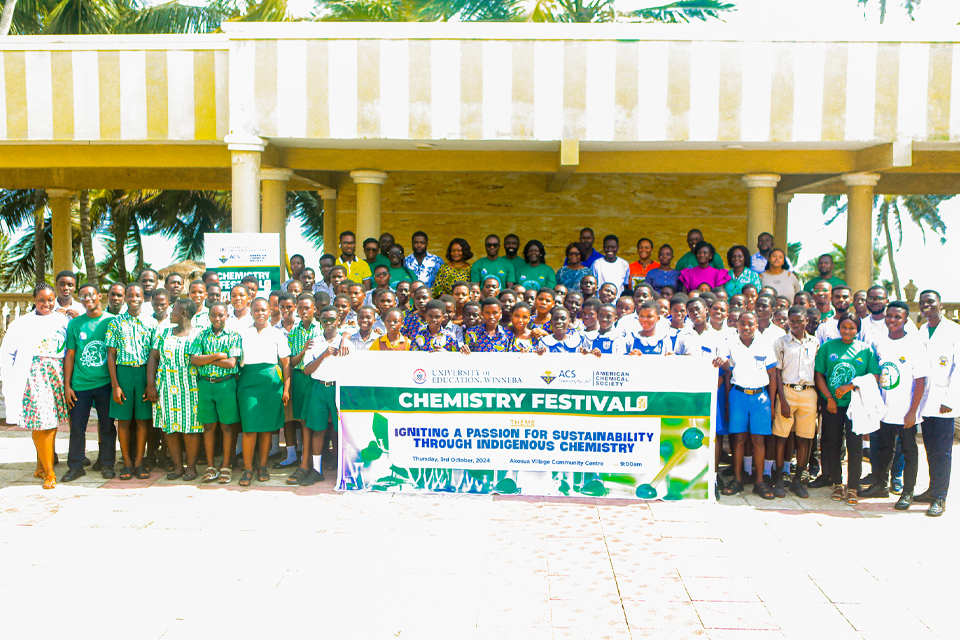
The Chemistry Festival, funded by the American Chemical Society (ACS), was held at Synclair International School on Tuesday, 15th September, 2026, under the theme, “Chemistry for a Better Planet.” The annual programme seeks to expose basic school pupils to practical chemistry and help them develop an interest in science.

Dr. Ernest Koranteng, the Head of the Department of Chemistry Education and Chairman of the programme, urged the pupils to cultivate curiosity, ask questions and seek solutions to problems in their environment. He stressed that science is not reserved only for academically brilliant students.
He explained that chemistry is embedded in everyday life, from food and water to cooking and materials used in the environment. Using plastic pollution at beaches as an example, Dr. Koranteng encouraged the pupils to understand the connection between environmental pollution, marine life and human health and to see themselves as young scientists capable of contributing to solutions.
“Scientists always find solutions to problems,” he said, urging the pupils to begin thinking about environmental challenges from their current level rather than waiting until university.

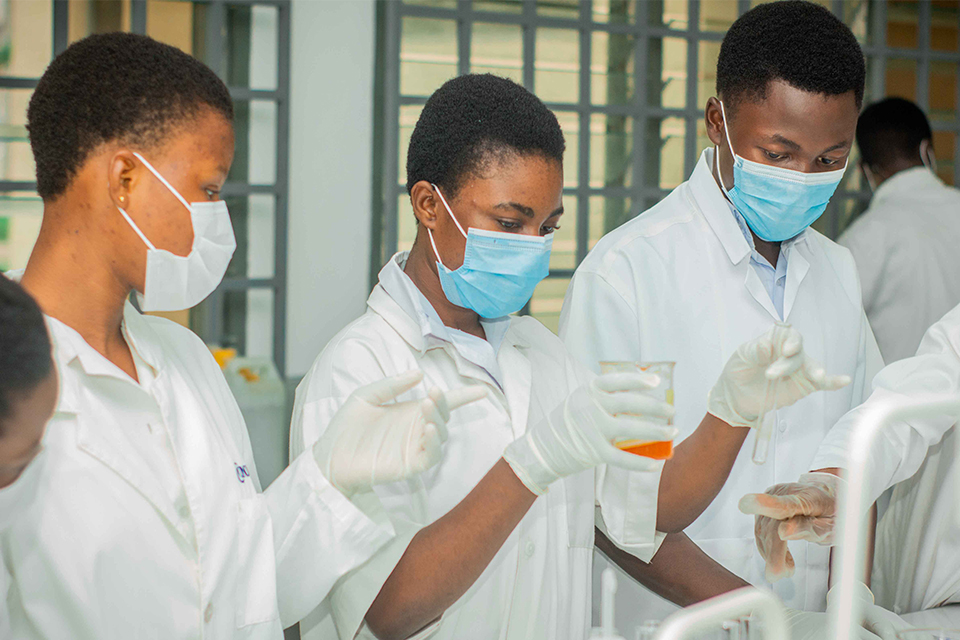
Prof. Ruby Hanson, a Professor of Chemistry at UEW, said the festival was designed to move pupils beyond merely hearing or reading about science to actually performing experiments themselves. She noted that the five practical activities provided opportunities for the pupils to explore scientific concepts connected to their homes, schools and the wider world.
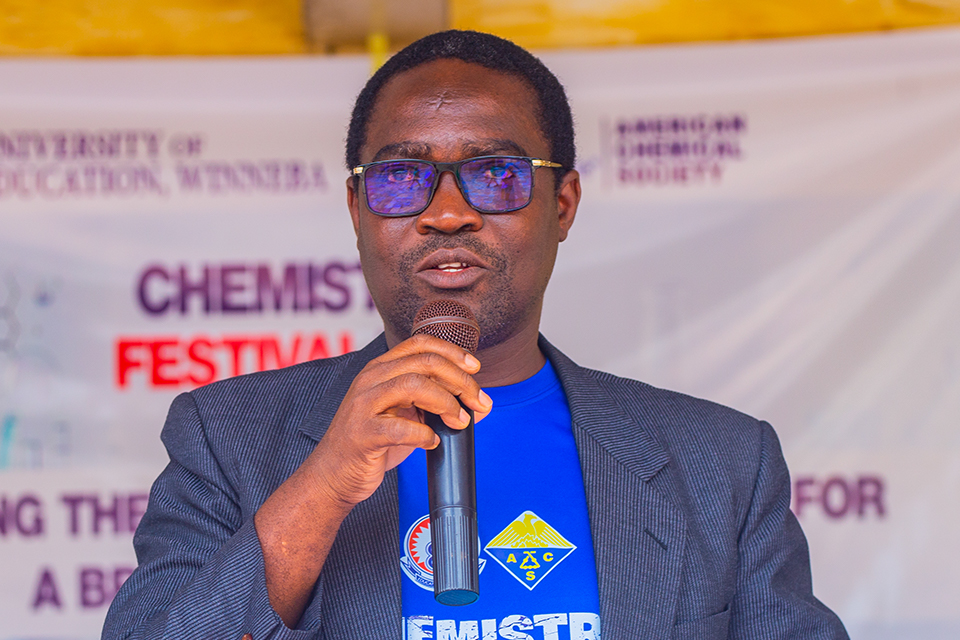
Prof. Arkoful Sam, the Dean of the Faculty of Science Education, commended the organisers for using the festival to make chemistry enjoyable and relevant to the pupils. He encouraged them to build on the knowledge and experiences gained from the activities and consider careers in chemistry and applied sciences.

Dr. Twumasi Ankrah Kwarteng, the Project Coordinator, explained that the activities were deliberately designed around green chemistry and the sustainable use of resources in the environment.
At the first activity station, the pupils produced natural cleaning agents using substances including turmeric, acetic acid and sodium carbonate, learning how natural materials could provide alternatives for household cleaning. The second station introduced them to invisible ink through acid-base reactions and indicators to demonstrate how colour changes could reveal chemical properties.
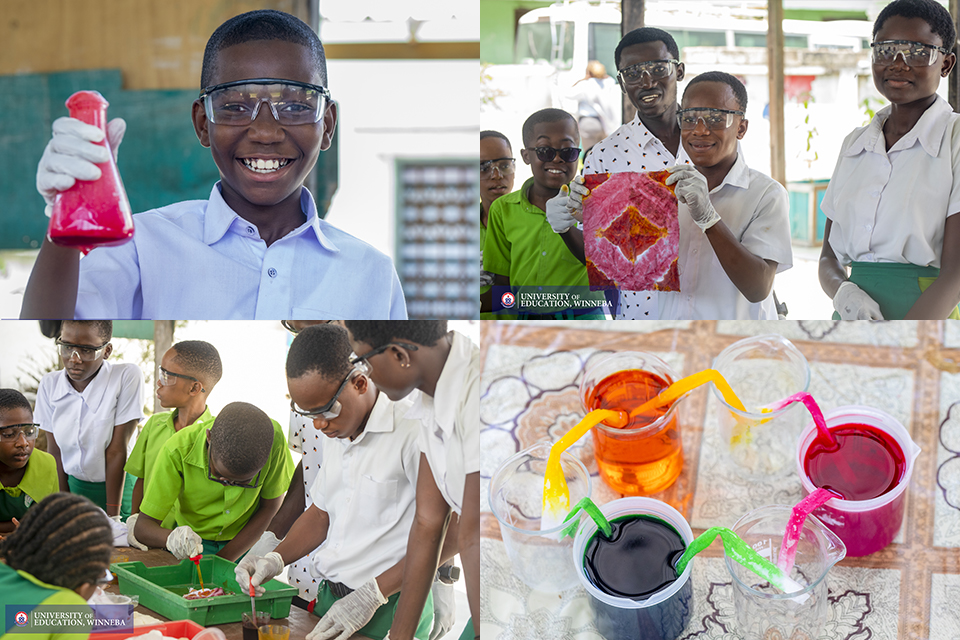
The pupils also explored capillarity through a “magic moving water” experiment, linking the movement of water in the activity to the way plants absorb and transport water from their roots to their leaves. At another station, they learned separation techniques including chromatography, filtration and magnetic separation while observing how mixtures and impure materials could be separated.
The final activity focused on fabric dyeing, where pupils used natural dyes such as turmeric and hibiscus to colour fabrics. The activity demonstrated how materials obtained from the natural environment can be used in textile production while reinforcing the practical applications of chemistry.
Dr. Kwarteng said the festival aimed not only to strengthen pupils’ understanding of chemistry but also to encourage them to appreciate and protect the environment. He stressed that activities involving natural substances could help the young participants recognise the value of environmental resources and develop habits that contribute to a sustainable future.

Mr. Kingsley Selby-Acquah, the Headmaster of Synclair International School, expressed appreciation to UEW’s Department of Chemistry Education for bringing the programme to the school for the second time. He said the festival had helped pupils strengthen their understanding of science and chemistry and supported their preparation for the Basic Education Certificate Examination (BECE).

Dr. James Kwame Kusi, a lecturer at the Department of Chemistry Education and member of the project team, described the Chemistry Festival as an annual initiative aimed at helping basic school pupils appreciate chemistry and develop interest in pursuing science-related studies.
The engagement ended with the pupils participating in hands-on experiments and interacting with the project team, reinforcing the message that chemistry is not confined to the classroom but closely connected to everyday life, environmental protection and the pursuit of sustainable solutions.