30th Congregation: UEW Council Chairman Calls for Renewed Stewardship and Institutional Discipline


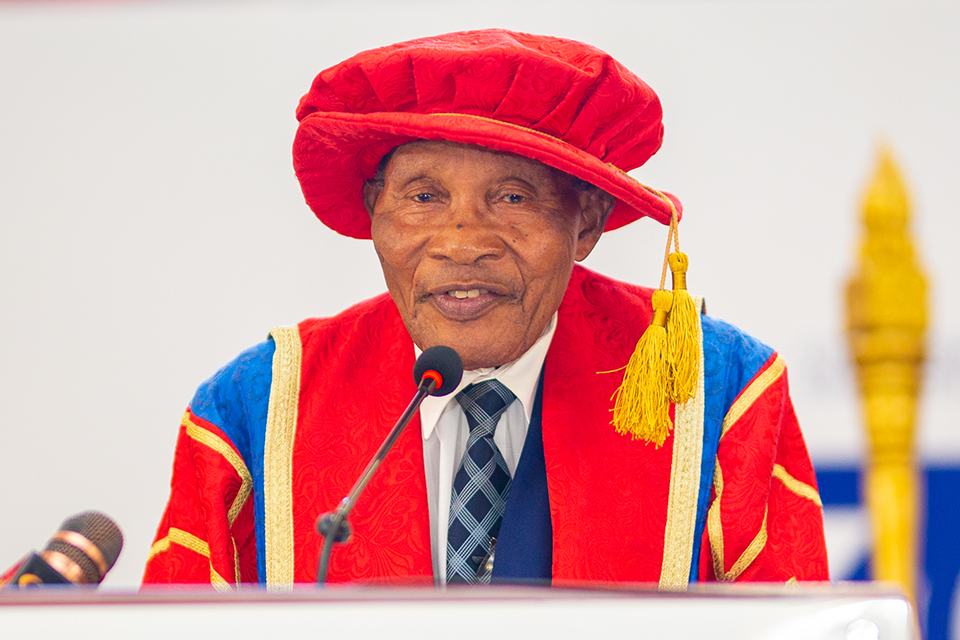
Justice Jacob Charles Amonoo-Monney, Chairman of the Governing Council of the University of Education, Winneba (UEW) has called for strengthened stewardship, institutional discipline and a renewed sense of shared responsibility.
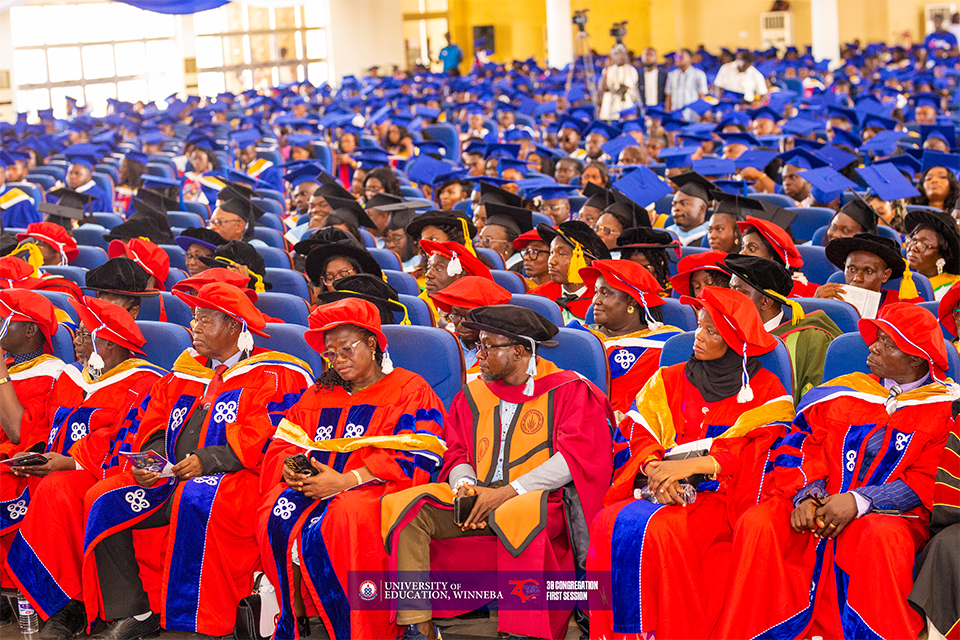
Addressing government representatives, traditional leaders, faculty, management, alumni, industry partners and hundreds of graduating students at the first session of UEW’s 30th Congregation on Friday, 28th and Saturday, 29th November, 2025, he described the congregation as a defining moment that reaffirms the University’s mandate to nurture ethical, innovative and service-oriented graduates for national development.
He noted that the past year had been significant for the University, particularly in deepening governance reforms aimed at promoting transparency, due process and institutional integrity. Council, he said, had worked closely with Management to streamline core systems and enhance accountability mechanisms, stressing that “a university that aspires to national relevance must first demonstrate institutional discipline.” According to him, good governance remains the anchor on which academic freedom, financial prudence and institutional excellence thrive.
Justice Amonoo-Monney outlined the strategic direction guiding the University’s current transformation agenda, highlighting quality enhancement, digital transformation and internationalisation as priority areas. He explained that ongoing improvements in supervisory structures, staff development and quality-assurance reforms are expected to elevate teaching and research standards across UEW’s campuses.
The University, he revealed, is also accelerating its digital infrastructure to modernise academic delivery, strengthen administrative efficiency and align operations with global expectations.
The Council Chairman applauded UEW’s expanding partnerships with foreign universities and international agencies, noting that such collaborations are deliberately pursued to open opportunities for students and staff, attract resources and raise the University’s global standing. “The future of UEW will be shaped not merely by tradition but by innovation, agility and openness to new models of learning,” he emphasised.
Justice Amonoo-Monney celebrated the resilience of the graduands, acknowledging the financial challenges, personal hurdles and disruptions many had endured along their academic journeys. He urged the graduands to view the occasion not only as a celebration of achievement but also as the beginning of greater responsibility to society. He encouraged them to contribute thoughtfully and ethically in their various fields, reminding them that they carry the identity and reputation of UEW wherever they go.
The Council Chairman also expressed appreciation to faculty and staff for their commitment to the University’s growth, assuring them of the Council’s continued resolve to support professional development and welfare. He reaffirmed the Council’s dedication to building an environment where merit is recognised, productivity is encouraged and professionalism is upheld. He pledged the Council’s commitment to maintaining a climate that supports academic success, well-being and personal development.
Justice Amonoo-Monney called for unity of purpose among all stakeholders—management, staff, students, alumni, partners and traditional authorities—to advance UEW’s vision. He urged the University community to uphold shared values and collectively build an institution that is academically vibrant, administratively strong, financially resilient and ethically grounded.
“As we celebrate our graduands, let us also celebrate how far we have come as an institution. May today reaffirm our commitment to building a university that not only responds to national needs but leads them,” he said.
He congratulated the graduands and encouraged them to serve with confidence, humility and purpose as they embrace new chapters in their professional lives.