UEW Students Participate in Play-Based Advocacy on Sexual Harassment and STIs


Level 100 students pursuing Social Studies at the University of Education, Winneba (UEW) have undertaken an experiential learning visit to the Right to Play Centre of Excellence to deepen their understanding of sexual harassment prevention and sexually transmitted infections (STIs) through play-based pedagogy.
The visit, which took place on Wednesday, 18th February, 2026, formed part of their coursework in Reproductive Health and Family Life Education and aimed at equipping students with practical advocacy skills while nurturing creativity, collaboration and critical thinking.
The activity follows an earlier engagement by Level 300 students of the Department of Basic Education, who visited the Centre to explore creative strategies for teaching the concept of the human body system. That session was led by Dr. Cosmos Eminah and focused on innovative approaches to science education in the classroom.

Prof. Lucy Effeh Attom, the Dean of the Faculty of Liberal and Social Studies, underscored the importance of advocacy in combating sexual harassment and the spread of STIs within the university community and beyond.
She explained that many students possess talents in art, design, writing, innovation, technology and social advocacy which can be harnessed for civic education and engagement. According to her, the practical assignment requiring students to develop posters, poems and visual campaigns aligns with the new curriculum and is designed to translate theory into action.
“Through these practical activities, students acquire 21st century skills such as collaboration and teamwork, critical thinking and problem-solving, innovation and digital literacy,” she noted. She further expressed appreciation for the supportive environment at the Centre and commended the Coordinator, Dr. Diana Adjei-Fianko, for her leadership.
Prof. Lucy Attom indicated that the initiative seeks to provide a platform for students to showcase their talents creatively, build confidence and presentation skills and promote peer learning and collaboration while addressing sensitive but critical societal issues.

Dr. Diana Adjei-Fianko, Coordinator of the Centre, provided insight into the facility’s establishment and mandate. She disclosed that UEW signed a Memorandum of Understanding with Right to Play Ghana, a leading organisation known for pioneering play-based approaches to learning and development. As part of this collaboration, the Centre was established under the School of Education and Life-Long Learning (SELLL) to promote child-centred, play-based pedagogies that support holistic development and lifelong learning.
Now fully operational, the Centre is mandated to provide training, research, advocacy and resource development in play-based learning. It also serves as a hub for collaboration among educators, researchers, policymakers and other stakeholders interested in strengthening early childhood and basic education through innovative teaching approaches.
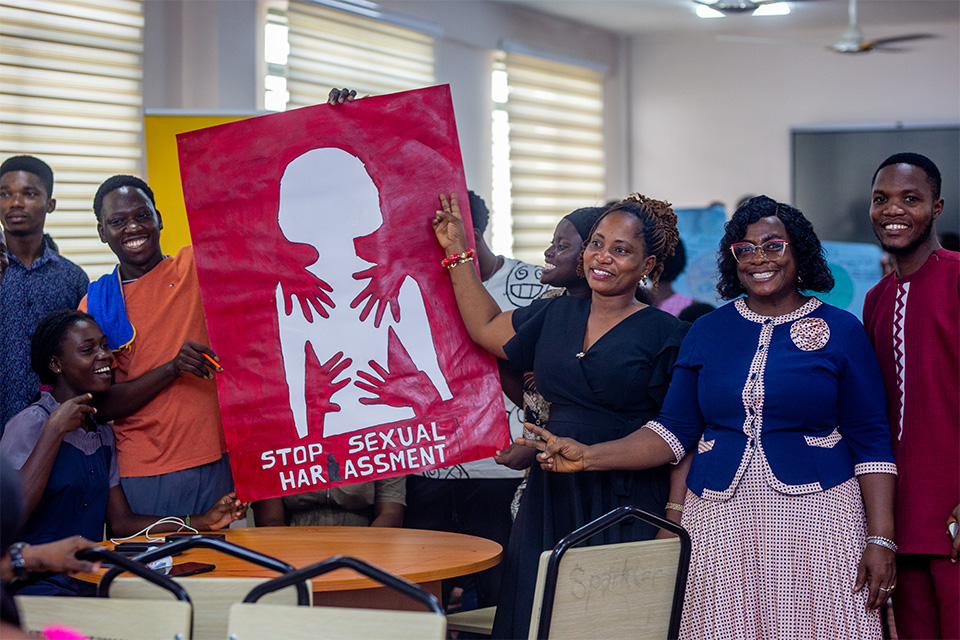
Student groups presented creative works that addressed sexual harassment prevention and STI awareness using diagrams, symbolic art and poetry.
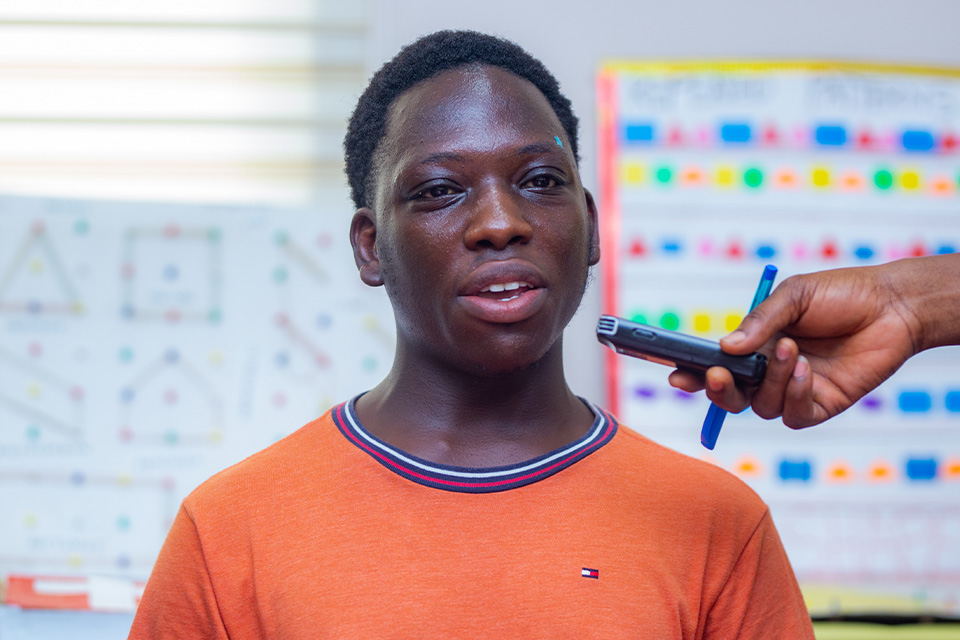
Isaac Kofi Enuson, a Level 100 Social Studies student, explained his group’s visual advocacy piece on sexual harassment. Using the symbolism of white to represent purity and red to signal danger, the group illustrated how victims often experience harassment in silence and without consent. He noted that sexual harassment can occur in schools, homes and workplaces, and stressed the need to allow victims to be heard.
He expressed optimism that the advocacy tools developed would help reduce the culture of silence surrounding sexual abuse and empower students to speak up and support affected persons.
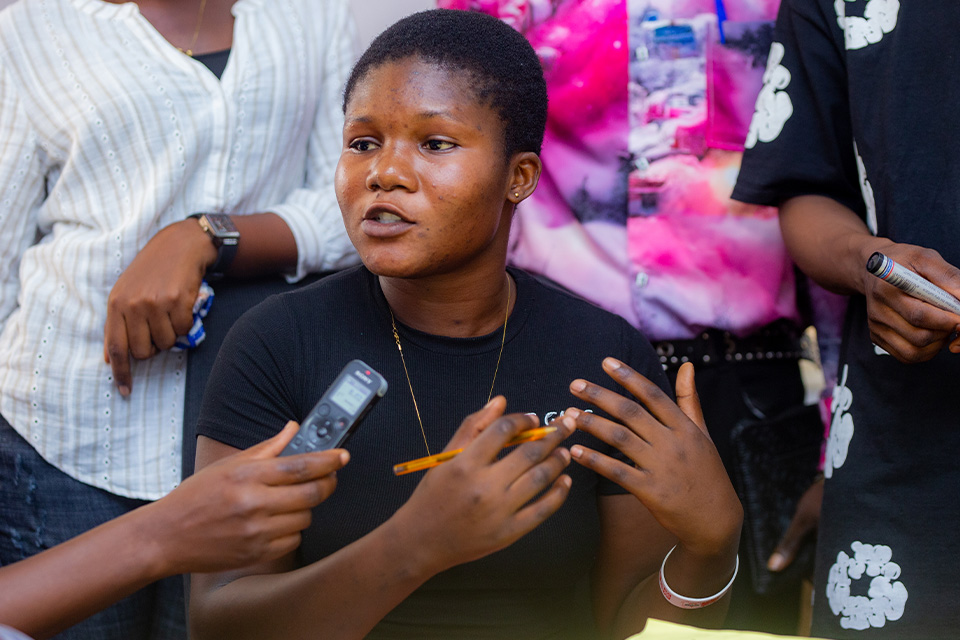
Another student, Grace Essien Mensah, focused her group’s presentation on STI awareness. She defined STIs as infections transmitted through sexual contact with an infected person and highlighted common examples such as syphilis, gonorrhea and HIV. She outlined causes, including unprotected sex and the use of infected objects, and emphasised preventive measures such as abstinence, condom use, regular medical check-ups and responsible sexual behaviour. She also encouraged compassion and care for persons living with infections to reduce stigma.
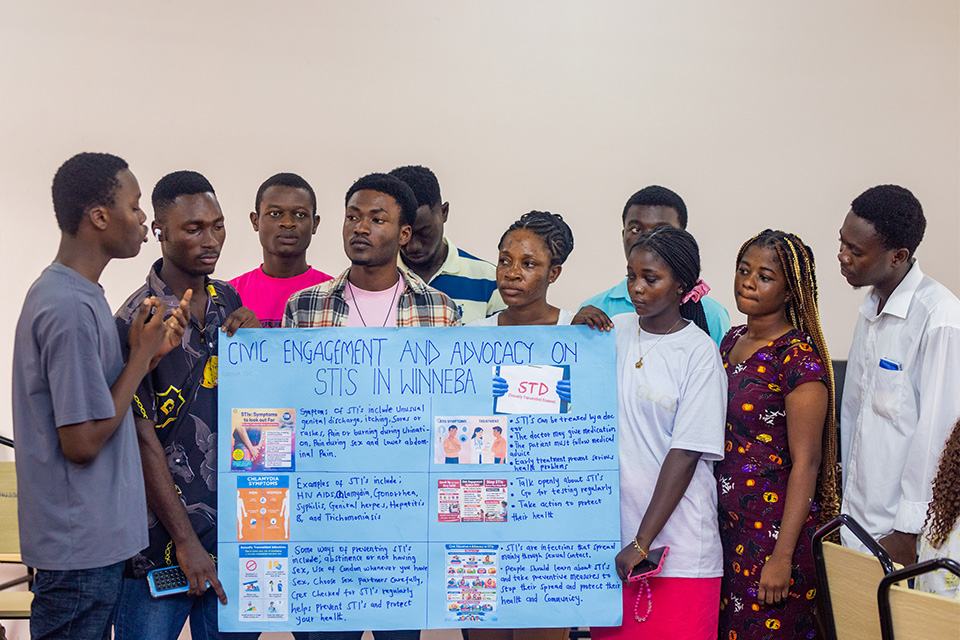
Similarly, Isaac Frimpong presented on civic engagement and advocacy on STIs in Winneba. He categorised STIs into bacterial, viral and parasitic types, explaining their symptoms and modes of prevention. He argued that youth-led advocacy is particularly effective because young people can easily relate to their peers and communicate preventive messages in accessible ways.
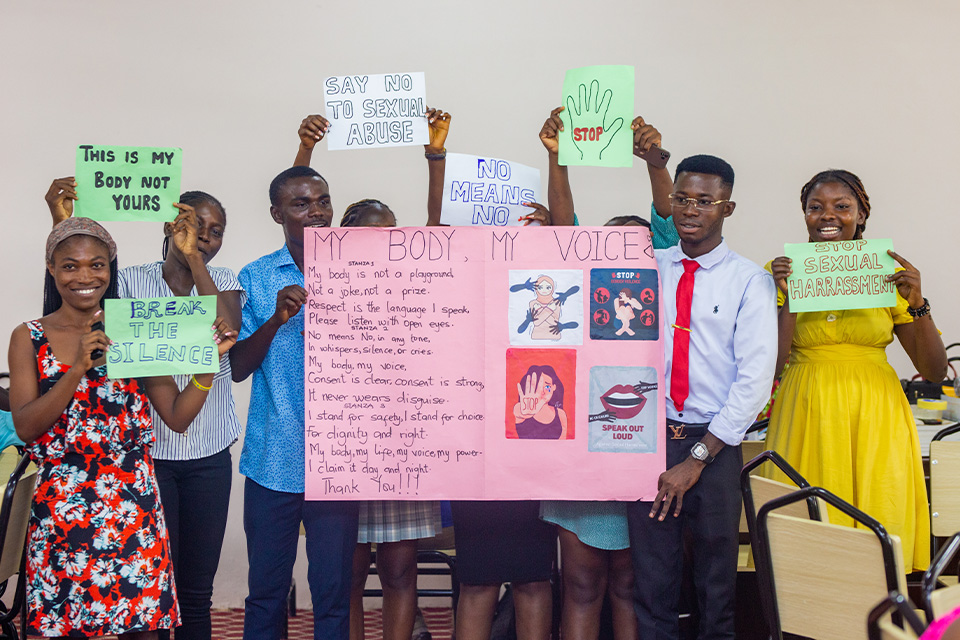
Adding a creative dimension to the advocacy campaign, Louisa Nketia and her group performed an original poem titled “My Body, My Voice.” The poem delivered a powerful message on consent, dignity and personal agency, emphasising that “no means no” and calling for an end to sexual harassment “now, today and forever.”
The visit demonstrated UEW’s commitment to experiential and community-engaged learning, where students are empowered to address real-life social issues through innovative and participatory approaches. By integrating play-based pedagogy with civic education, the University continues to nurture socially responsible graduates equipped not only with academic knowledge but also with the skills and confidence to champion positive change in society.