
QAD-UEW Trains Vice-Deans to Reinforce Decentralised Quality Culture


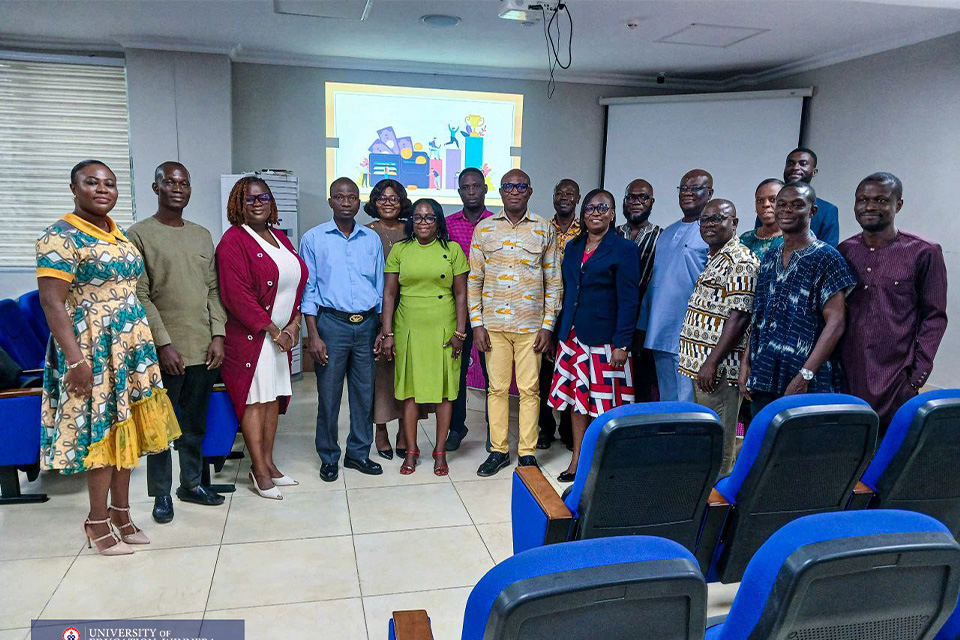
The Quality Assurance Directorate (QAD) of the University of Education, Winneba (UEW) on Tuesday, 3rd February, 2026, organised a one-day capacity-building workshop for Vice-Deans at the Students Centre Seminar Room III to strengthen decentralised quality assurance systems across faculties and schools.
The engagement formed part of the University’s broader strategic effort to embed a culture of quality, accountability and continuous improvement within academic governance structures.
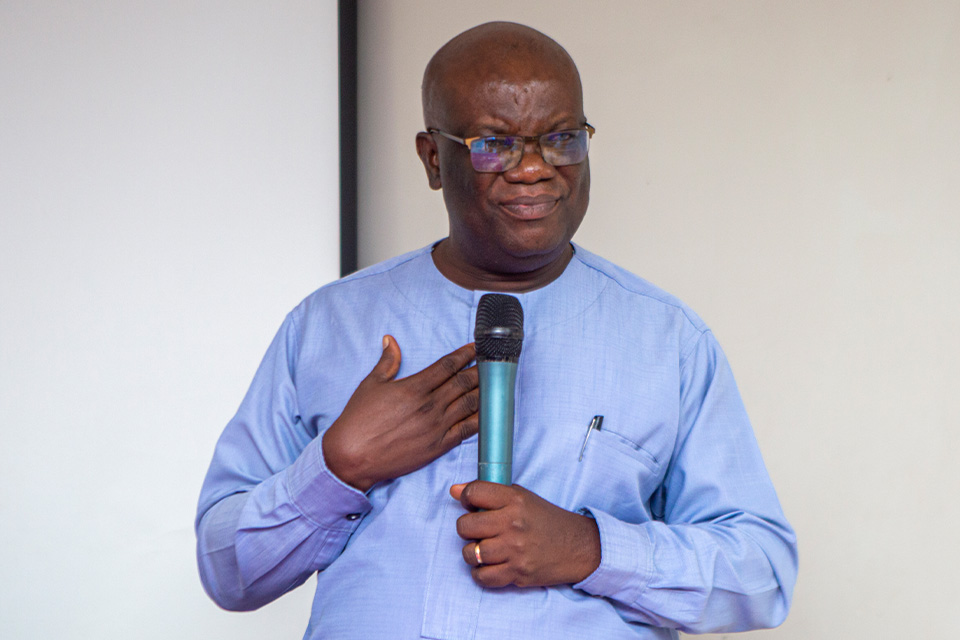
The workshop brought together Vice-Deans and key academic leaders and was designed to reposition them as faculty-based drivers of quality assurance. In his welcome address, Prof. Victor Antwi, Deputy Director of QAD, explained that the initiative was necessitated by the Directorate’s limited staffing capacity relative to the size and growing demands of the University. He noted that a small team currently oversees quality-related matters across the entire institution, making decentralisation both practical and necessary.
Prof. Antwi emphasised that Vice-Deans are strategically positioned within faculties to support quality assurance functions and effectively serve as faculty-level Quality Assurance Officers. The workshop, he stated, aimed to deepen participants’ understanding of quality assurance processes and equip them to execute their roles confidently and consistently within their respective units.

Chairing the programme, Prof. Esther Yeboah Danso-Wiredu, the Pro-Vice-Chancellor, described quality assurance as “the heartbeat of every university,” stressing that academic rigour, innovation and institutional reputation are directly linked to the strength of quality systems. She reiterated Management’s commitment to integrating planning and accreditation into the broader quality assurance framework to improve coordination and oversight.
Prof. Esther Danso-Wiredu advocated a deeper decentralisation of quality responsibilities, urging faculties to take ownership of infrastructure maintenance, policy compliance and student engagement in quality processes. She proposed practical solutions to resource constraints, including allocating infrastructure maintenance budgets directly to faculties to address minor defects promptly and prevent deterioration. She also underscored the importance of involving students as key stakeholders in safeguarding University property and upholding institutional standards.

Prof. Emma Sarah Eshun, Director of Quality Assurance, outlined the statutory responsibilities of the Directorate under the 2020 UEW Statutes. She highlighted its role in coordinating assessment instruments for annual staff appraisal, overseeing policy review and accreditation processes, conducting monitoring and evaluation and ensuring adherence to institutional standards across academic and administrative operations.
She noted that sustaining standards for over 60,000 students and more than 600 teaching staff requires coordinated effort at all levels of the University.

Mrs. Shiella Appiah Kubi, Assistant Registrar at QAD, addressed common misconceptions about the Directorate’s functions, clarifying that quality assurance extends far beyond examination monitoring. She explained that Vice-Deans, as faculty-based quality assurance officers, are expected to support accreditation processes, ensure smooth conduct of examinations, monitor policy compliance and submit timely faculty reports.

In his keynote address, Prof. Anselm Komla Abotsi, Dean of the Faculty of Social Sciences Education, situated quality assurance within the broader context of national development and global competitiveness in higher education. He argued that investment in quality human capital yields significant returns in innovation, productivity and economic growth.
Prof. Abotsi described Vice-Deans as the “engine room” of faculties, bridging leadership decisions and operational realities. He challenged participants to move beyond perceiving quality as mere compliance and to embrace it as a commitment to students and society. He identified the pillars of a sustainable quality culture as shared understanding, ownership, academic integrity, psychological safety and honest engagement with student feedback.
The workshop featured interactive sessions focused on policies, standards, implementation challenges and faculty-level action planning. Participants were encouraged to develop practical strategies to address documentation gaps, infrastructure concerns, compliance fatigue and resistance to change.
The engagement concluded with a shared commitment among Vice-Deans and the Directorate to strengthen academic integrity, governance and institutional excellence through collaborative and decentralised quality assurance practices. The workshop reaffirmed UEW’s determination to consolidate its quality systems and sustain its reputation as a credible and competitive higher education institution.