UEW Pro-Vice-Chancellor Calls for Increased Investment in Teachers


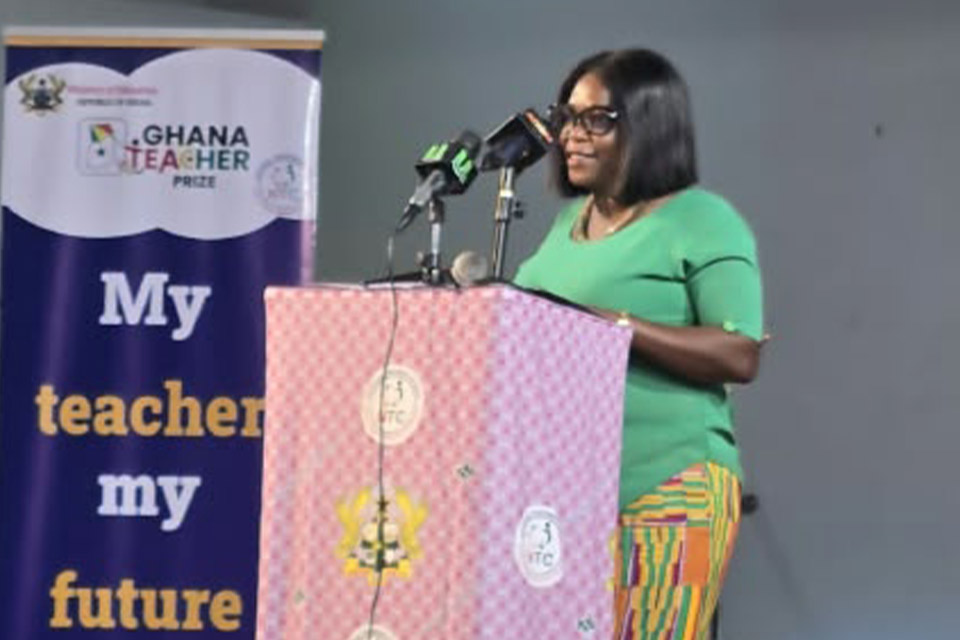
Prof. Esther Yeboah Danso-Wiredu, the Pro-Vice-Chancellor of the University of Education, Winneba (UEW), has called for sustained investment in teachers’ professional development, improved working conditions and greater decision-making authority to enable them to effectively shape the future of Ghana’s education system.
She made the call while delivering the keynote address at the opening of a two-day symposium organised by the Ministry of Education through the National Teaching Council (NTC), in collaboration with the Ghana Education Service (GES), as part of the activities marking the 2026 Ghana Teacher Prize.
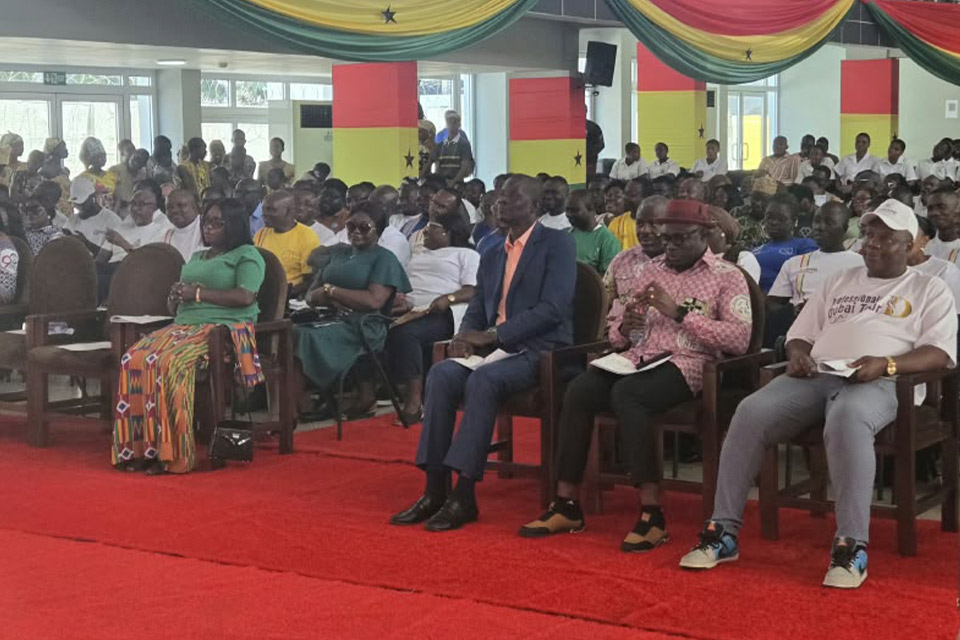
The symposium, held in Accra on Saturday, 3rd October, 2026, with the theme “Empowering Teachers: Architects of the Future,” was honoured by the presence of the Minister of Education, Hon. Haruna Iddrisu, and the Technical Advisor to the Minister, Prof. George Kofi Toku Oduro.
In her address, Prof. Esther Danso-Wiredu described teachers as more than just classroom instructors, stressing that they play a fundamental role in preparing learners not only for examinations but also for life and the rapidly changing world of work. She noted that every profession “passes through the hands of a teacher,” making the quality of support, resources, trust and professional freedom available to teachers critical to the kind of future Ghana will build.
According to her, rapid advances in artificial intelligence, technology and globalisation, combined with the growing influence of social media and misinformation, have transformed the educational landscape and require teachers to adapt continually. “The jobs that today’s children will perform may not even exist in their present form. We, therefore, cannot prepare tomorrow’s citizens using only yesterday’s methods,” she said.
Prof. Esther Danso-Wiredu cautioned against viewing technology as a replacement for teachers, arguing that while technology can transform how teaching is delivered, it cannot replace the human connection at the heart of education. “A machine can provide information; a teacher provides meaning. A machine can generate an answer; a teacher helps a learner understand why the answer matters,” she said.
She consequently advocated for a shift from merely introducing technology into classrooms to empowering teachers with the knowledge, resources and professional autonomy required to use such technologies effectively.
Regarding professional development, the Pro-Vice-Chancellor emphasised the need for continuous learning opportunities that enable teachers to enhance their pedagogical and digital competencies, understand emerging technologies and artificial intelligence, improve assessment practices and respond effectively to diverse and inclusive learning needs.
She also urged policymakers to give teachers a stronger voice in educational reforms, noting that those who work closest to learners possess valuable practical knowledge that should inform curriculum development, policy and educational innovation. “Educational reforms should not merely be delivered to teachers; they should be designed with teachers, informed by teachers and implemented with teachers,” she emphasised.
Prof. Esther Danso-Wiredu further called for improvements in teachers’ working conditions, pointing out that teachers cannot be expected to serve as “architects of the future” while some work in inadequate classrooms, with insufficient teaching and learning materials, and under difficult working and living conditions. She stated that recognition of teachers’ contributions must be matched with opportunities, resources, authority and institutional support.
The Pro-Vice-Chancellor also challenged teachers to embrace broader professional roles as designers of learning, mentors, researchers, innovators, facilitators, critical thinkers, technology users and lifelong learners.
She stressed that teachers shape learners not only through their instruction but also through the behaviours they model. She explained that qualities such as curiosity, integrity, resilience and innovation demonstrated by teachers can become traits that learners develop.
Prof. Esther Danso-Wiredu further argued that Ghana’s education system should move beyond an exclusive focus on examination success to developing young people capable of critical thinking, effective communication, collaboration, problem-solving, value creation, adaptability and integrity.
She called for what she described as a renewed “social contract” with teachers, under which society would trust, invest in, support and recognise teachers while giving them room to grow and innovate. In return, teachers would commit to excellence, continuous learning, innovation, and placing learners at the centre of their work.
“Ghana cannot build a better future while neglecting the people who are building that future,” she said, urging stakeholders to go beyond merely celebrating teachers to actively “build the builder.”
Prof. Esther Danso-Wiredu concluded by emphasising that the future Ghana envisions is already taking shape in today’s classrooms. She called on stakeholders to empower teachers with the knowledge, resources, professional voice and freedom to innovate necessary to build a stronger education system.