STRATCOM-UEW Leads Campaign to Raise Awareness of Testicular Health


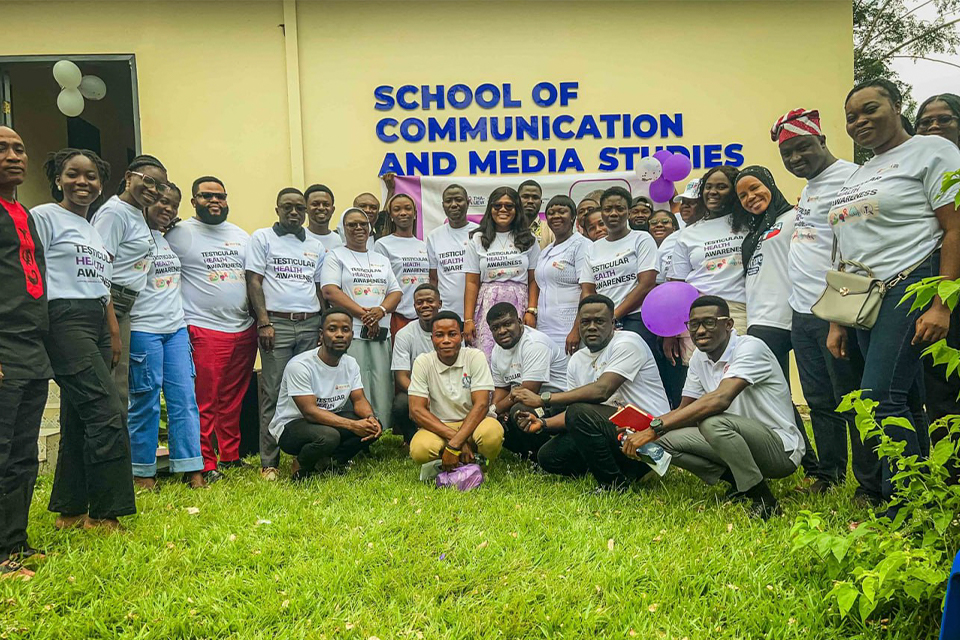
The Department of Strategic Communication (STRATCOM) under the School of Communication and Media Studies (SCMS), University of Education, Winneba (UEW), took a bold step to break the silence around men’s health with the organisation of a Testicular Health Awareness Seminar.
The event, which was held at the SCMS Seminar Room on Thursday, 25th September, 2025, formed part of a Social Campaign Planning and Management course project designed to respond to pressing social issues through advocacy and public education.
The seminar sought to raise awareness about testicular health, a subject often overlooked in health discourse in Ghana despite its importance to men’s overall well-being. While global and national campaigns frequently spotlight women’s health, especially breast cancer awareness in October, the student-led initiative underlined the need to pay equal attention to men’s reproductive health challenges.
In her welcome address, Prof. Mavis Amo-Mensah, Head of STRATCOM, lauded the initiative and described it as timely. She explained that the Department deliberately chose to highlight men’s health as part of its course project to correct the long-standing imbalance in health communication where women’s health issues dominate advocacy. “The focus has always been on women when it comes to awareness about health risks. This time, we want to focus on the men. Men also have health challenges and testicular health is one of them,” she noted.
Prof. Mavis Amo-Mensah expressed confidence that the seminar, led by students, would raise awareness and dispel myths surrounding testicular health while encouraging men to take preventive action. She commended the students for initiating the campaign and stressed that awareness creation is a powerful tool in breaking cultural barriers around sensitive health issues.
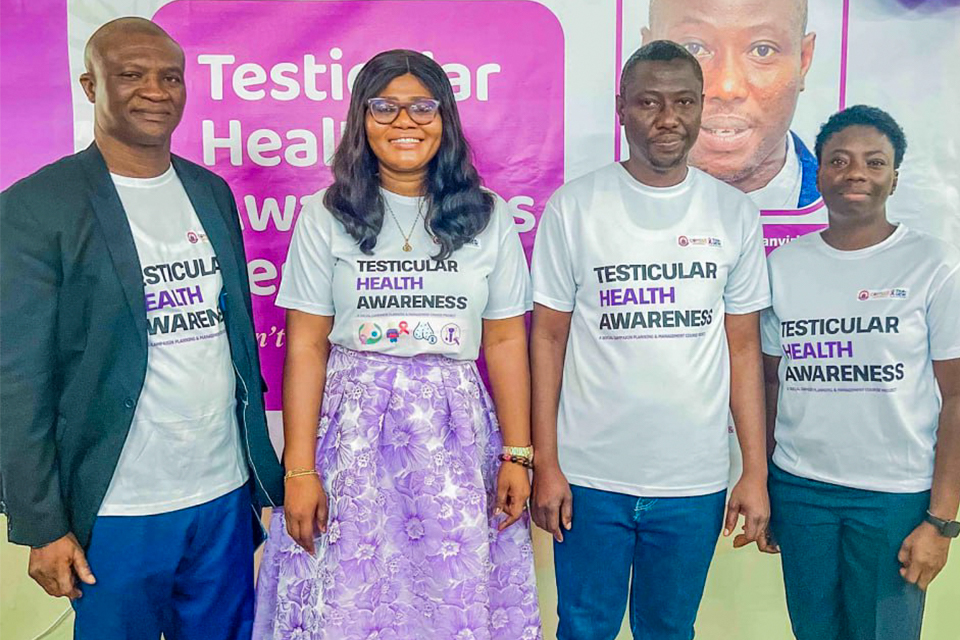
Prof. Albert Agbesi Wornyo, Dean of SCMS, reinforced the message, drawing attention to the cultural perceptions and attitudes that shape how men treat their reproductive health. He recounted how mothers are often meticulous in caring for their sons’ health during childhood but lamented that many men abandon such attentiveness as they grow older.
“Our mothers respect the testicle but when we become boys and then men, we seem not to care. Sometimes even bathing is a problem. Yet, when issues arise, many men feel shy to seek help,” he said, adding that stigma and embarrassment often prevent young men from reporting testicular problems early.
Prof. Wornyo also highlighted how societal expectations about masculinity sometimes push men towards unsafe practices such as the misuse of unregulated drugs and performance enhancers while ignoring the fundamental importance of testicular health. He called for broader conversations on men’s reproductive health, observing that concerns about fertility and sexual performance are often misplaced and could be better managed through early medical attention. “The production sector, the testicles, must be examined and taken seriously. Without testosterone, the male body cannot function as it should,” he emphasised.
The keynote address was delivered by Dr. John Kanyiri Yamba, Director of UEW Health Services, who provided participants with both scientific insight and practical advice on testicular health. Dr. Yamba described the testes as “one of the most hardworking organs in the body,” responsible for sperm production and the secretion of testosterone which defines male sexual characteristics such as body hair, deeper voice, muscle development and overall virility. He explained that sperm production is a continuous process that takes about three days, underscoring the critical role of the testes in reproduction.
Dr. Yamba also tackled the misconceptions surrounding sexual health, explaining that in most cases, the testes function normally and that many of the concerns men have about sexual performance are tied more to personal and social expectations than to biological dysfunction. “Without the testes, biologically, we would all be female. The testes are vital for male virility but most issues arise from men's and women's expectations of one another, not from testicular failure,” he remarked.
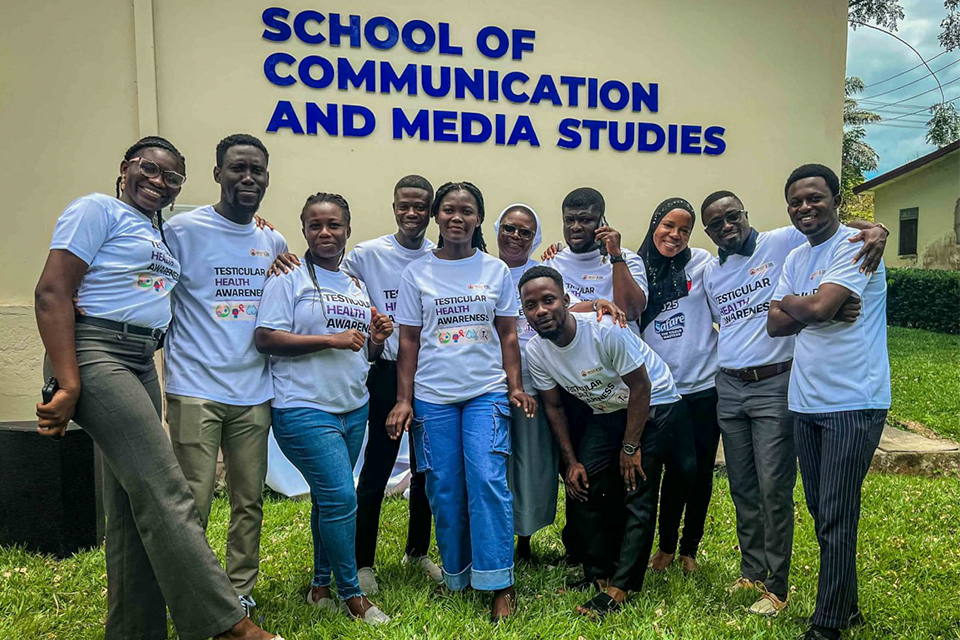
The Director of Health Services encouraged regular self-examination of the testicles as a preventive measure and urged participants to seek medical attention promptly when abnormalities are detected. He pledged to link the initiative with the Regional Health Directorate as part of efforts to mainstream men’s health into the broader healthcare agenda.
The seminar created a lively and engaging platform where myths were debunked, health facts were highlighted and participants were urged to treat testicular health as a priority rather than a taboo subject.
The Testicular Health Awareness Seminar not only marked a significant step in UEW’s commitment to social impact through academic projects but also amplified the call for a balanced approach to health advocacy, one that recognises that men too face reproductive health challenges deserving of sustained public education.