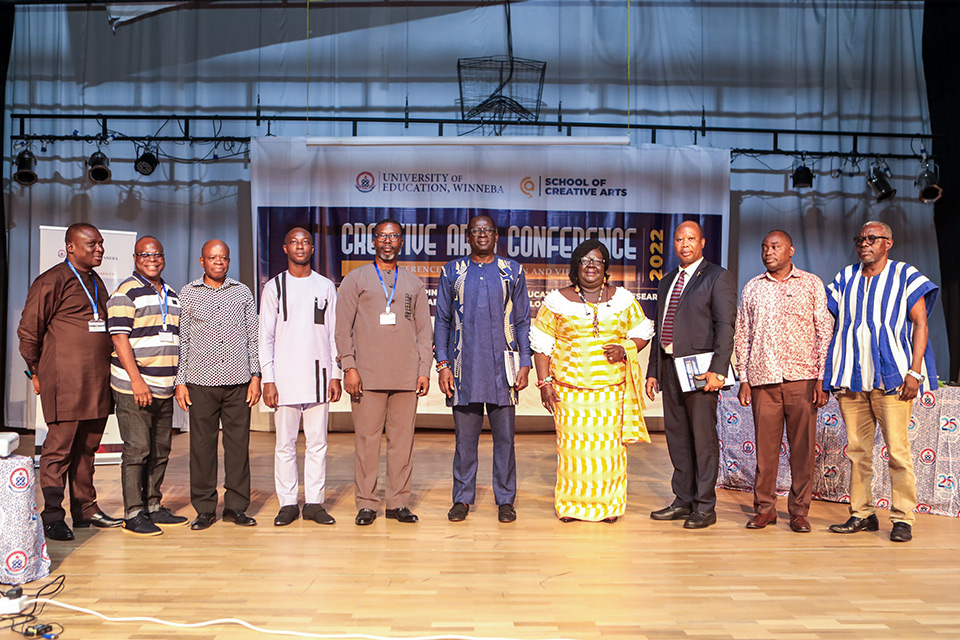
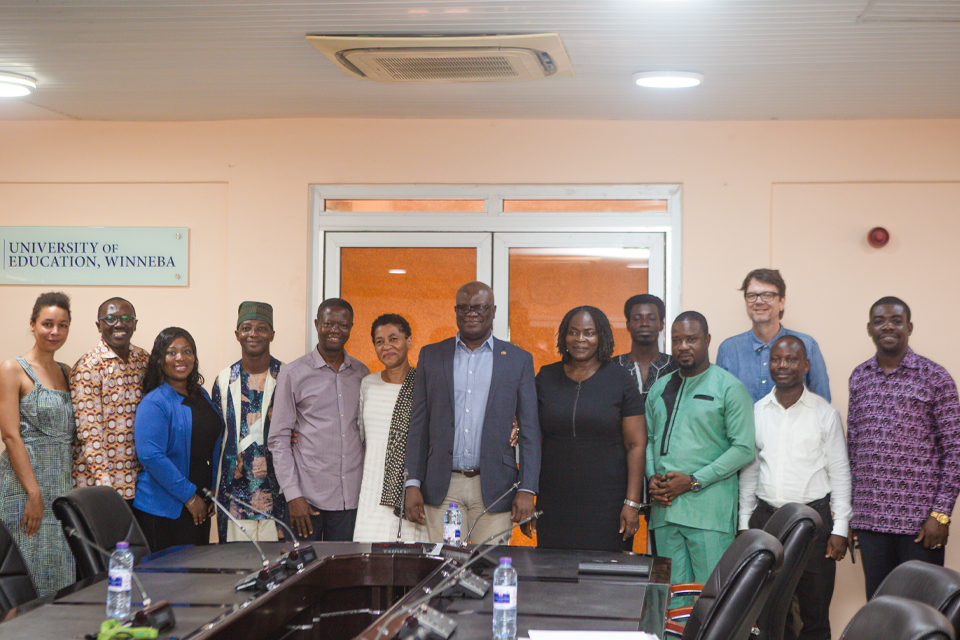
SCA-UEW Hosts Leadership Workshop


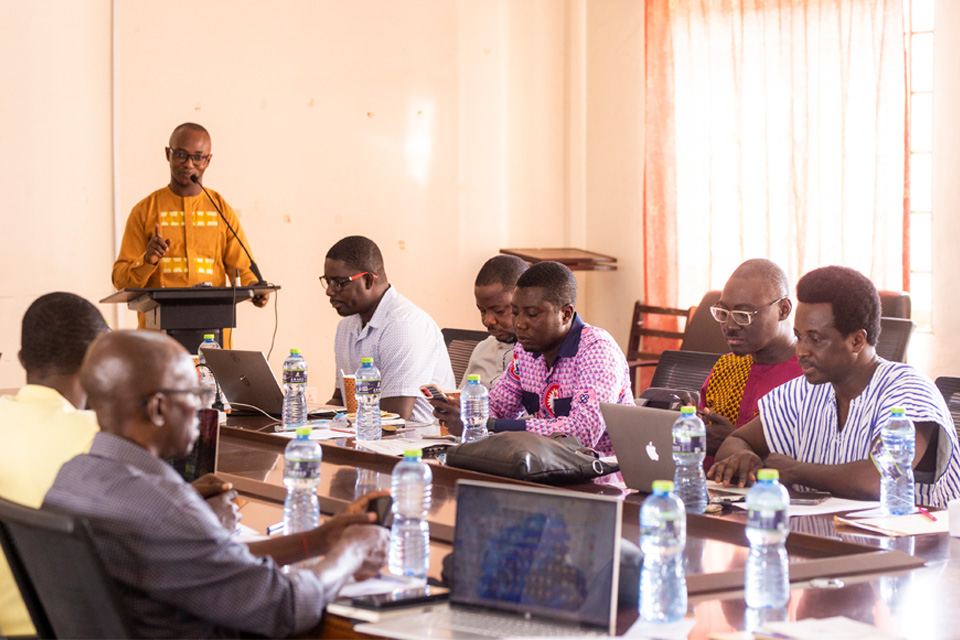
The School of Creative Arts (SCA) at the University of Education, Winneba (UEW) organised a leadership workshop for heads of department, graduate coordinators, examination officers, and senior administrators to enhance governance, research integrity, financial management and leadership practices across the faculty.
The workshop, held on Thursday, 28th August 2025, at the SCA Conference Room at the Central Campus, featured a nine-part series of presentations covering the legal, ethical and managerial responsibilities of academic leaders. It also offered practical guidance on supervision, budgeting, student relations and staff development.

In his opening speech, Prof. Emmanuel Obed Acquah, Dean of SCA, described the event as a timely effort to reinforce the foundation of academic leadership within the faculty. He reminded participants that academic leadership must be exercised with diligence, prudence and accountability. He further urged them to adhere to the University’s statutes and policies and incorporate them into their everyday leadership practices.
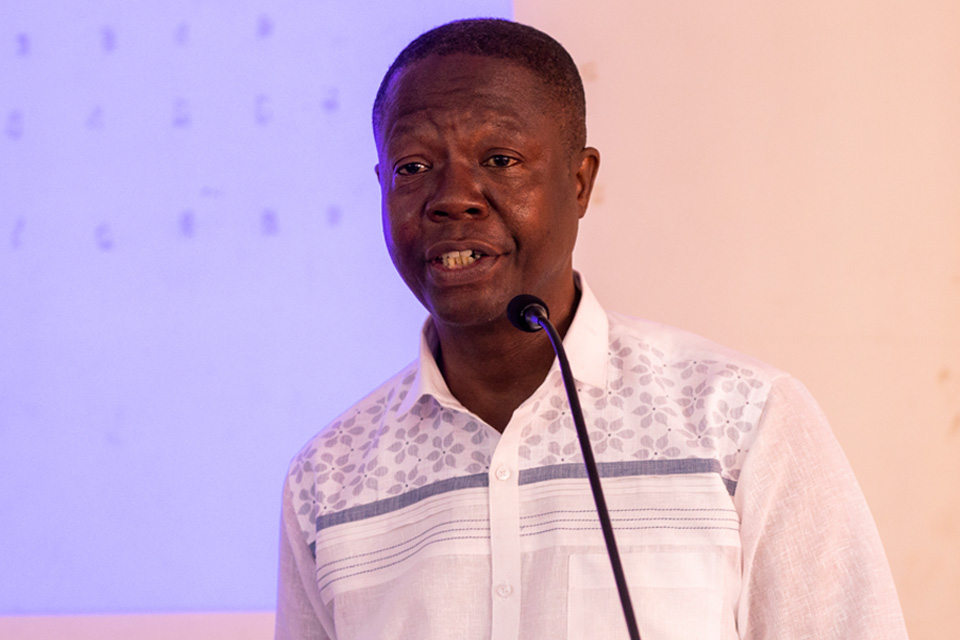
Prof. Frimpong Kaakyire Duku, Principal of the College for Distance and e-Learning, emphasised the importance of governance in a university setting. Referencing the UEW Act and statutes, he highlighted that institutional identity and authority depend on law, policy and proper documentation.
Prof. Duku encouraged departments to keep current records, plan strategically for programme expansion and staff development and align departmental actions with the faculty’s strategic plan, particularly in areas such as revenue generation, programme growth and internationalisation.

Speaking on legal and ethical issues, Prof. Osuanyi Quaicoo Essel, Vice-Dean of SCA, warned participants that the powers they exercise have legal implications. He addressed topics related to codes of conduct, conflicts of interest, data protection and the limits of academic freedom. He reminded leaders that while academic freedom is constitutionally protected, it is not absolute and procedural lapses can expose the university to reputational and legal risks.
Prof. Acquah, in a separate session, highlighted the role of heads of department as accountable officers within the University’s financial framework. He explained budgeting procedures, resource mobilisation and financial accountability, emphasising that sound financial management and timely procurement are vital to departmental credibility.

On leadership and soft skills, Dr. Pearl Adubea Hammond, Faculty Officer of SCA, facilitated an interactive session on communication, emotional intelligence and stress management. Using practical exercises, she demonstrated how miscommunication occurs and advised participants to practise emotional intelligence and protect their energy while managing multiple responsibilities.
Other sessions focused on practical administration and financial procedures. Ms. Nana Adjoa Asiedu Addo from the SCA Accounts Office urged departments to submit accurate student data to support revenue forecasts and guided them through procedures such as pro-forma invoices, advance payments and payment requests.
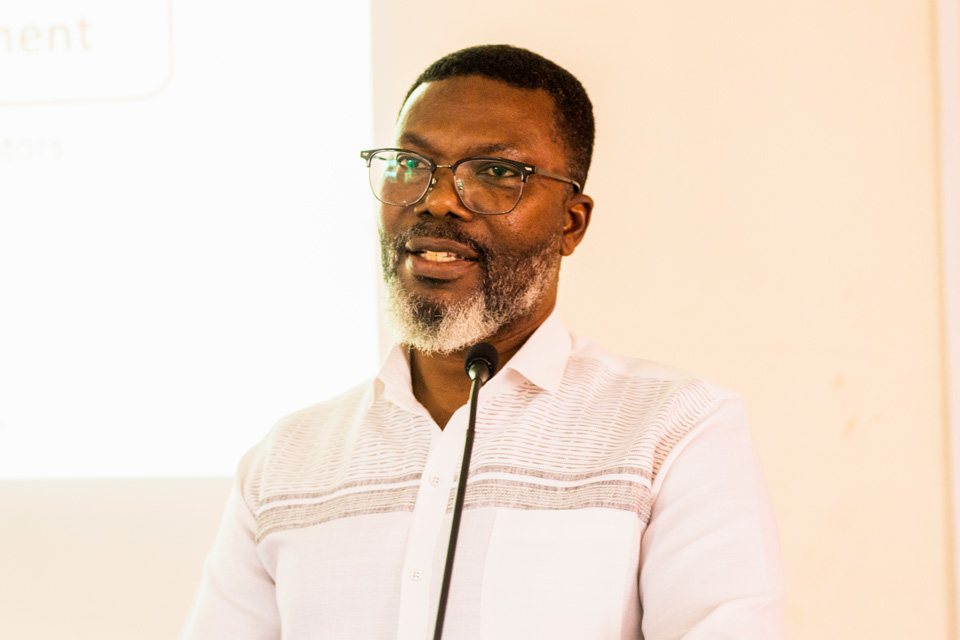
Regarding graduate studies, Prof. Patrique deGraft Yankson emphasised the dual role of graduate coordinators as managers and mentors. He called for stronger supervision policies, regular ethics training and the establishment of a research ethics review mechanism to address issues such as plagiarism and weak supervision. He also stressed the necessity for consistent sanctions to uphold research standards.
Throughout the workshop, speakers encouraged participants to foster collegiality, maintain accurate records, hold regular meetings and utilise faculty strategic documents to guide departmental planning. They also urged departments to seek internally generated funds, increase community engagement and explore innovative initiatives such as an SCA online or television channel to elevate the faculty’s visibility.
In his closing remarks, Prof. Acquah thanked participants and organisers, affirming the faculty’s support for future capacity-building efforts.
Dr. Pearl Hammond, who delivered the vote of thanks, reiterated the importance of emotional intelligence and encouraged participants to apply the lessons learned to help make the SCA the exemplary faculty it envisions.
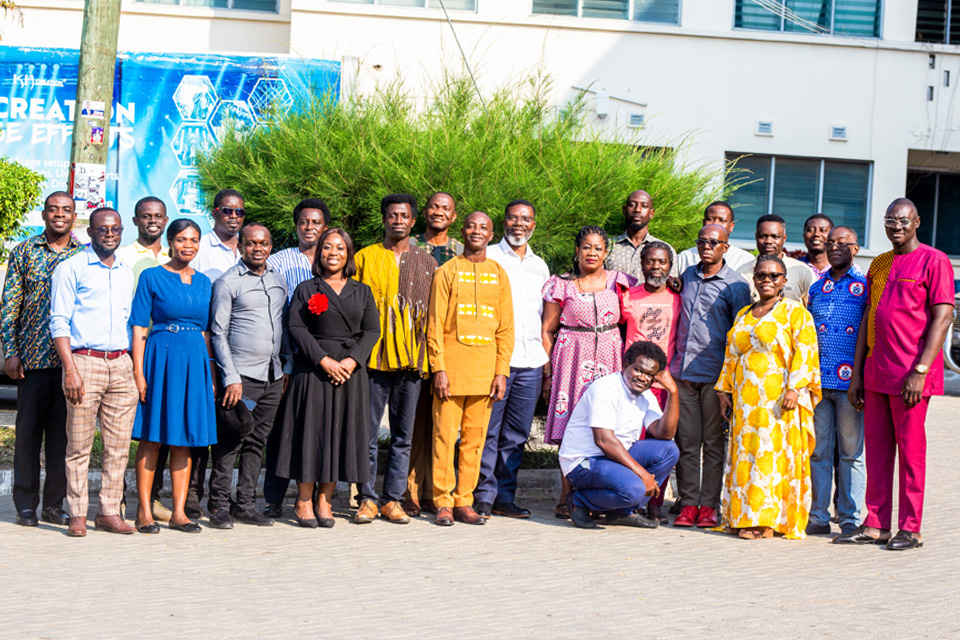
The workshop was both an assessment and a solutions-focused session, highlighting challenges such as supervision gaps, plagiarism and procurement delays while proposing practical remedies such as ethics training, transparent budgeting, stronger supervision policies and ongoing staff development.
Participants concluded the session with a resolve to share workshop materials with their departments, initiate follow-up training and implement improved documentation and resource management practices.