UEW Supports ACS Green Chemistry Through School Competition


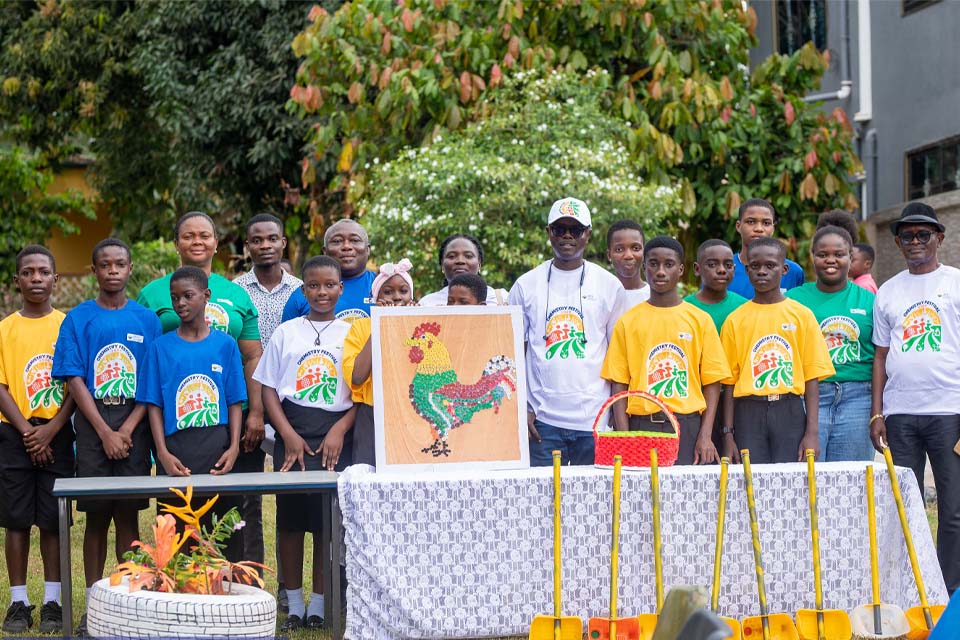
The University of Education, Winneba (UEW) has supported the American Chemical Society (ACS) in organising a Chemistry Festival aimed at promoting practical chemistry, creativity and environmentally sustainable practices among school pupils.
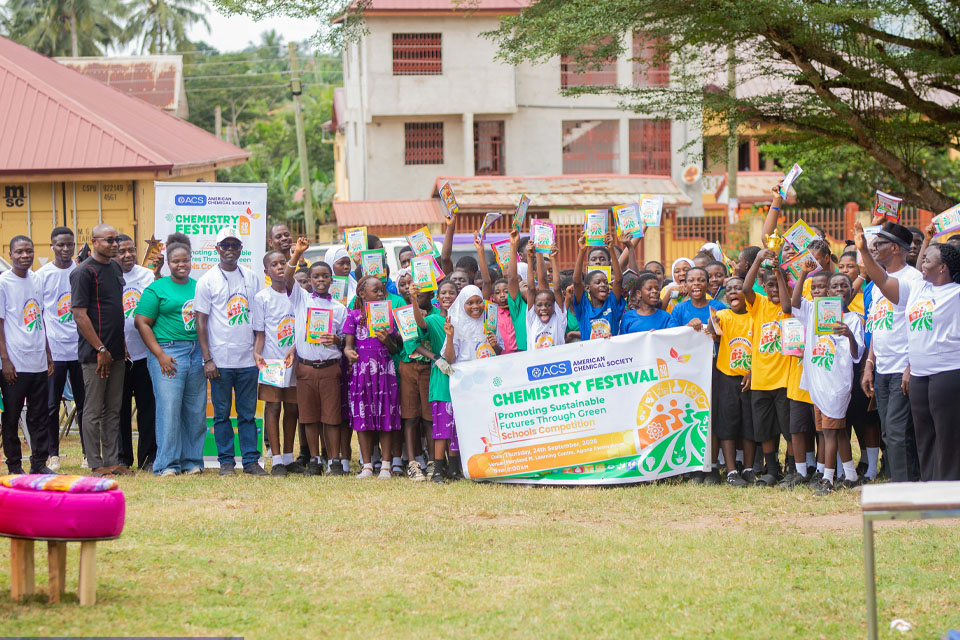
Held at the Maryland Montessori Learning Centre in Agona Kwansakrom on Thursday, 24th September, 2026, the festival, themed “Promoting Sustainable Futures Through Green Schools Competition” and funded by the ACS, brought together more than 500 pupils, teachers, parents, faculty members, volunteers and community stakeholders.

The programme was coordinated by a team of UEW faculty members including Dr. Charity Esenam Anor, a Senior Lecturer at the Department of Integrated Science Education and Secretary of ACS-Ghana International Chemical Sciences Chapter; Dr. Stephen Twumasi Annan, an environmental specialist and Dr. Cynthia Jebuni Adanu, a physicist, whose contributions helped facilitate the festival’s practical and interdisciplinary focus on sustainable practices.
The initiative aims to spark students' interest in chemistry by demonstrating how they can apply scientific knowledge to everyday environmental challenges, particularly through waste reduction, recycling and reuse.

Dr. Ishmael Kwesi Anderson, the programme Chairman and a Senior Lecturer at UEW’s Department of Physics Education, urged that chemistry extend far beyond classroom theory and laboratory exercises. He emphasised that the subject must help learners understand their environment and invent innovative solutions to societal challenges.
He emphasised that the festival gives pupils a unique opportunity to cultivate scientific curiosity, practice problem-solving and use resources responsibly. Furthermore, he stressed that students must apply this scientific knowledge to champion cleaner production and protect the environment.
Dr. Anderson encouraged participating pupils to ask questions, develop innovative ideas and recognise science, particularly chemistry, as part of everyday life.

Ms. Afua Amoabea, a project team member and a member of the ACS, said the festival was conceived in response to the need to reduce everyday waste and promote greener communities. She said the programme was designed to enable pupils to experience chemistry through indigenous and practical approaches while learning how their actions could contribute to a more sustainable environment.
The practical sessions saw pupils from the participating schools demonstrate a range of activities linking chemistry to waste management and everyday applications.
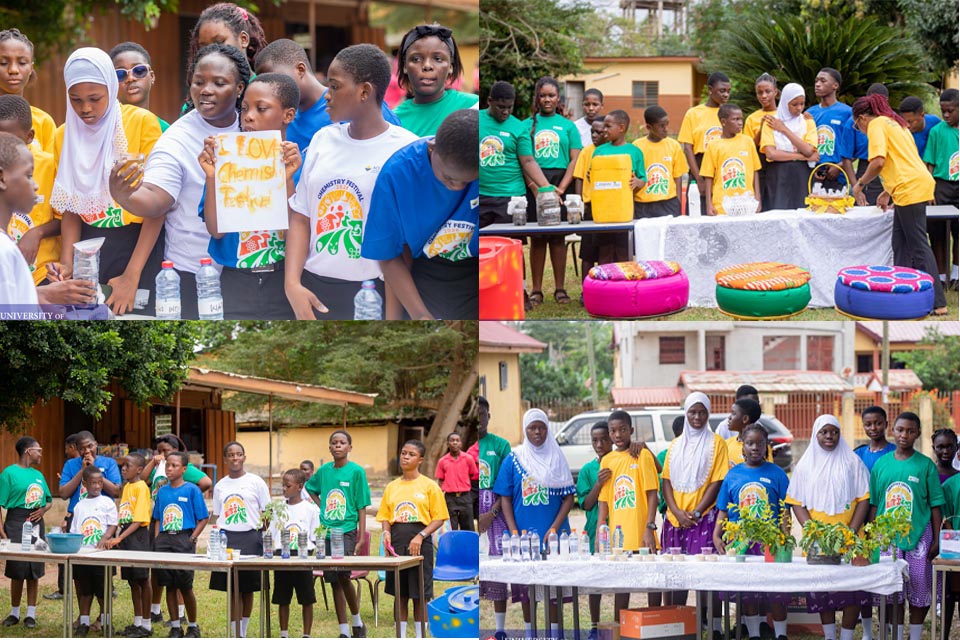
Students at the host school, Maryland Montessori Learning Centre, demonstrated how discarded plastic gallons and bottle caps retrieved from a dumpsite could be repurposed into dustbins, dustpans, baskets and other useful items. They also demonstrated the use of recycled materials in gardening and explained scientific principles such as capillary action.
The pupils further demonstrated the preparation and use of natural indicators to distinguish between acidic, basic and neutral substances, using plant-based materials and household substances to illustrate colour changes associated with differences in pH.
Students from Swedru International School demonstrated soap-making and explained the chemical process involved including the reaction between palm kernel oil and caustic soda. The exercise also emphasised the importance of using appropriate measurements and scientific understanding when preparing products.

A three-member judging panel assessed these activities based on creativity, scientific explanation and sustainability. Maryland Montessori Learning Centre emerged as the winner, scoring 22 out of 30 marks while Swedru International School placed second with 15 marks.

Declaring the results, one of the judges, Dr. Worlanyo Kwabena Agbosu, a Senior Lecturer at UEW’s Department of Agricultural Science Education, said the festival showcased that science is not confined to laboratories but is evident in everyday activities at school, home and in the community.
He commended the pupils for their creativity and practical application of scientific knowledge. He noted that the competition provided an opportunity to connect classroom learning with real-life environmental challenges.
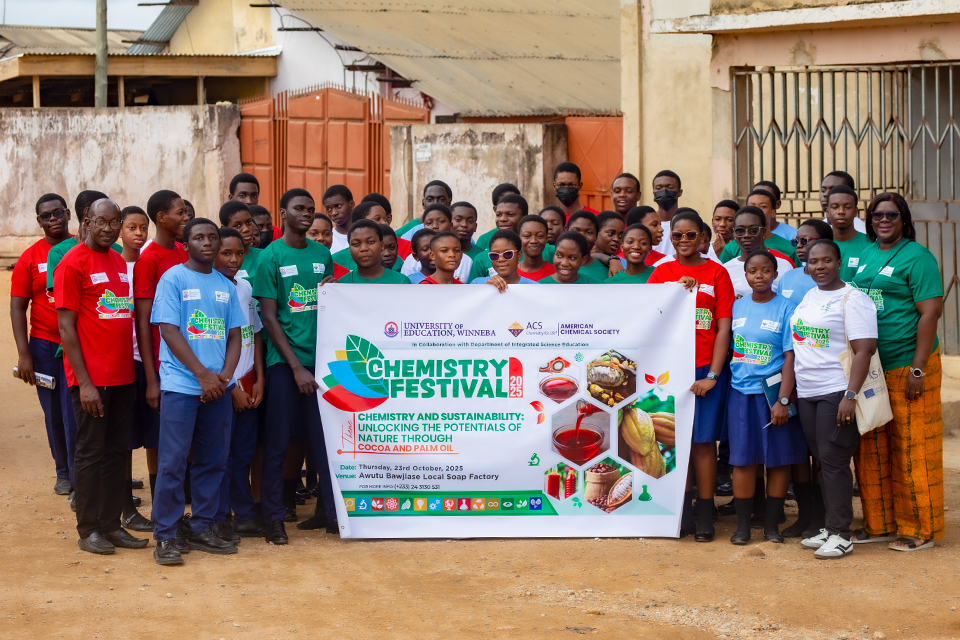
The Chemistry Festival forms part of efforts by the Department of Integrated Science Education to promote STEM learning through practical experiences that equip young learners with the knowledge and creativity to contribute to sustainable development.