
UEW Enhances Safety Culture Through Fire Prevention Training for FPU Staff


The University of Education, Winneba (UEW) has reinforced its commitment to staff safety and institutional resilience by organising comprehensive fire safety and prevention training for the staff of the Food Production Unit (FPU). The training sessions were held at the North Campus Mini-Conference Room on Friday, 13th March and Thursday, 19th March, 2026.
The two-day training, led by the Directorate of Security Services in collaboration with the Division of Human Resource, is part of UEW’s proactive strategy to foster a strong culture of safety awareness and emergency preparedness among its workforce.

Delivering the welcome address, Ms. Maura Francisca Tenteh, Coordinator of the Welfare Unit under the Division of Human Resource, underscored the importance of safeguarding lives, property and the integrity of the University. She noted that the training was not only to educate participants but also to instill a culture of responsibility and readiness in preventing and responding to fire outbreaks.
She emphasised that safety must be a shared responsibility, urging staff to actively engage in learning practical skills that would enable them to respond swiftly and effectively in emergency situations.

ADO I Louis Ato Aikon, a Senior Safety Officer from the Ghana National Fire Service (GNFS), highlighted the evolving focus of fire safety from reactive firefighting to preventive education. He explained that many fire incidents result in significant losses before emergency responders arrive, making prevention and preparedness crucial.
He introduced participants to the basic concept of fire, describing it as a chemical reaction involving fuel, heat and oxygen, elements collectively known as the fire triangle. According to him, understanding how these elements interact is essential in preventing fire outbreaks.
ADO I Aikon further elaborated on common causes of fire including cooking practices, electrical faults, improper handling of gas cylinders and human negligence. He cautioned against risky habits such as shaking gas cylinders to check their contents, storing cylinders indoors and using faulty electrical connections. He stressed the importance of proper ventilation, regular maintenance of equipment and adherence to safety protocol, particularly in kitchen environments where fire risks are high.

Sqn. Ldr. Daniel Kwaku Sapey, Director of UEW Security Services, emphasised the need for discipline and vigilance in managing fire risks, particularly in institutional settings where the safety of many individuals is at stake. He noted that fire incidents can have devastating consequences including loss of life, destruction of property and disruption of academic and administrative activities. He encouraged staff to prioritise safety at all times and to adhere strictly to recommended safety practices.
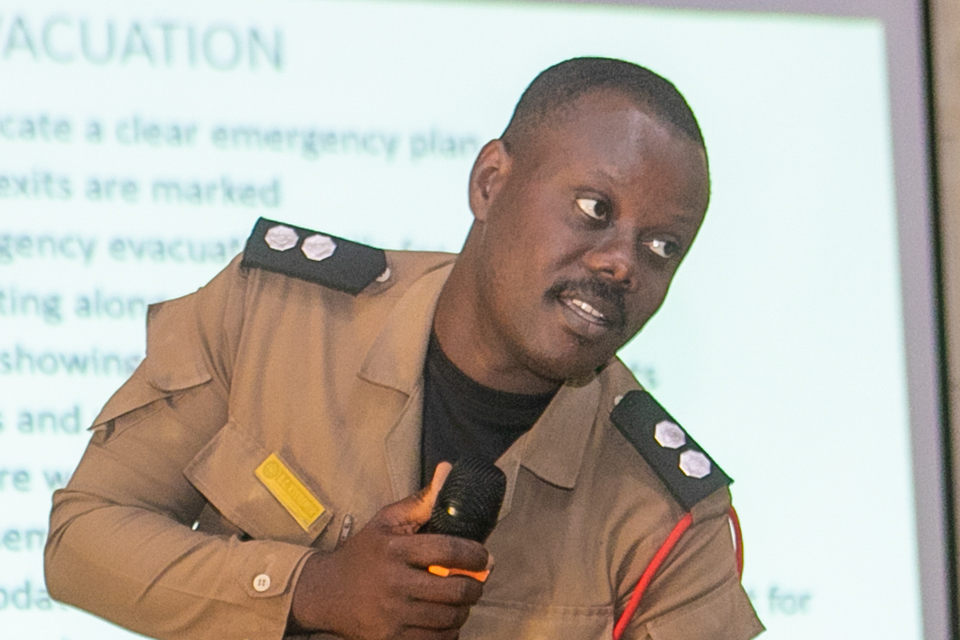
STN/O Collins Kyereweh, who also contributed to the training, highlighted the importance of emergency preparedness and evacuation planning. He stressed that having clear emergency exit routes, designated assembly points and regular evacuation drills is essential to ensuring a coordinated response during fire outbreaks. He urged staff to remain calm during emergencies and to prioritise their safety over material possessions.
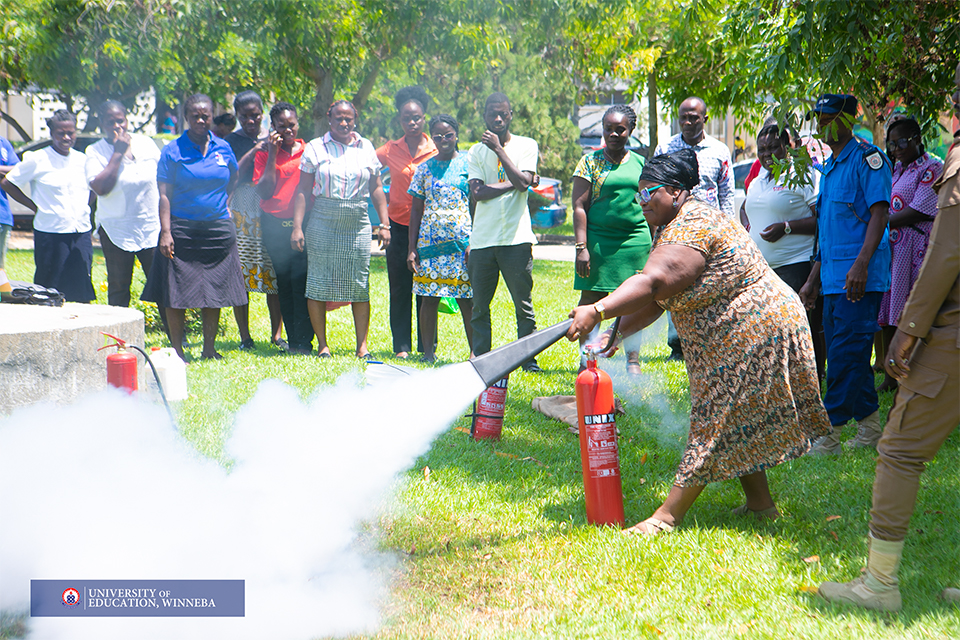
The training also provided practical demonstrations on the use of fire extinguishers, with participants introduced to the PASS technique—Pull, Aim, Squeeze and Sweep. Facilitators explained the different types of extinguishers and their appropriate applications, particularly the use of carbon dioxide and dry chemical powder extinguishers for residential and kitchen settings. Participants were cautioned against using water to extinguish electrical or gas fires as this could worsen the situation.
The session addressed critical safety practices such as avoiding overloaded electrical circuits, unplugging appliances when not in use, ensuring proper installation of wiring systems and maintaining clear access routes for emergency response. The facilitators also emphasised the importance of regular inspection and servicing of fire safety equipment to ensure their effectiveness.
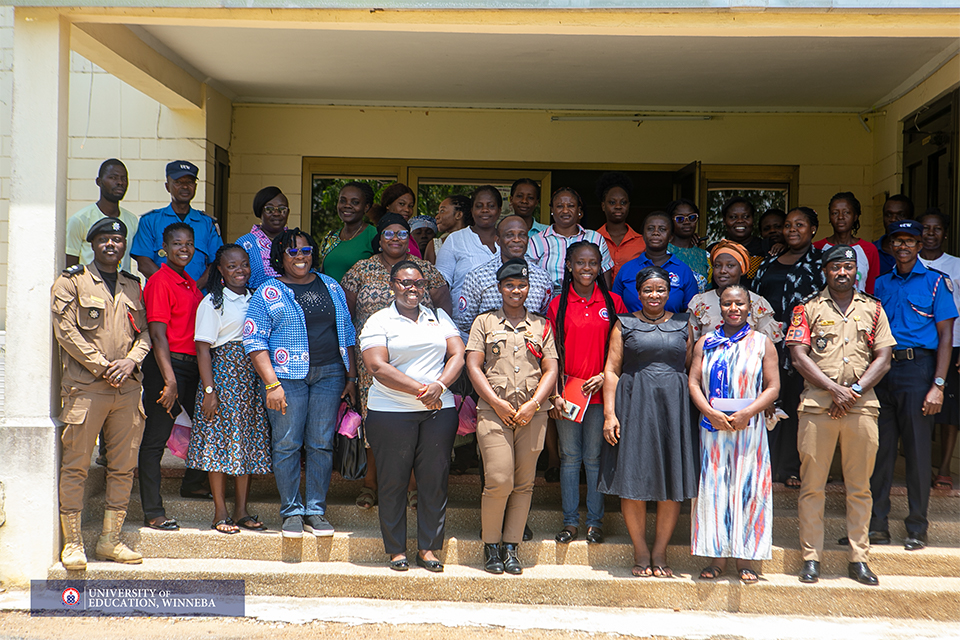
The interactive nature of the training allowed participants to ask questions and share experiences, fostering a deeper understanding of fire safety practices. Staff were encouraged to apply the knowledge gained in their daily activities to minimise risks and contribute to a safer working environment.
The initiative reflects UEW’s broader commitment to occupational health and safety, ensuring that staff are well-equipped with the knowledge and skills necessary to prevent and manage emergencies. By investing in such training programmes, the University continues to demonstrate its dedication to creating a safe and secure campus for all.