UEW Engages GTEC Review Team, Receives High Praise for Inclusivity


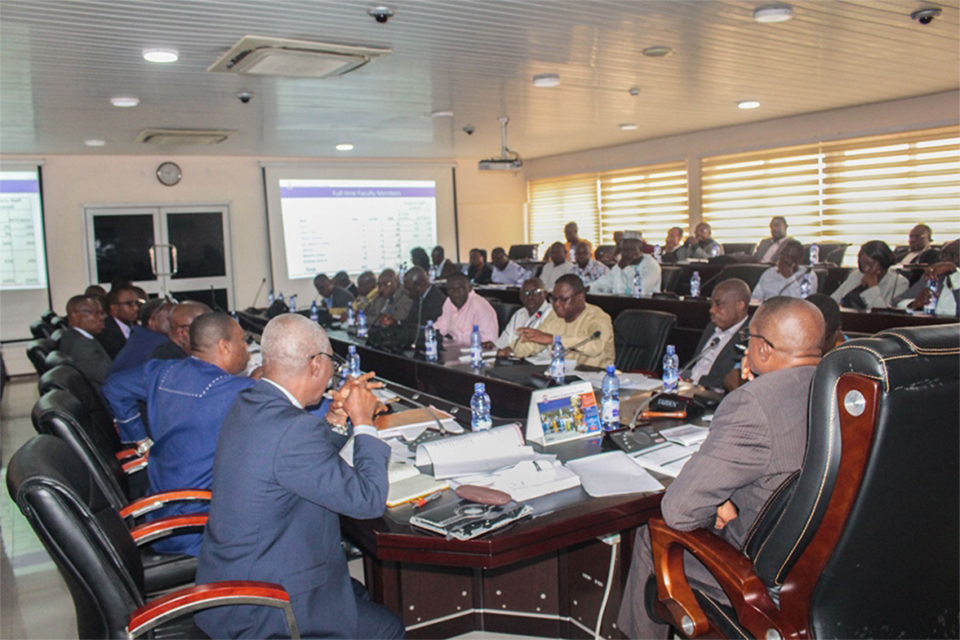
Management of the University of Education, Winneba (UEW) has reiterated its commitment to continuous improvement and excellence following a successful engagement with an Institutional Review Assessment Team from the Ghana Tertiary Education Commission (GTEC).
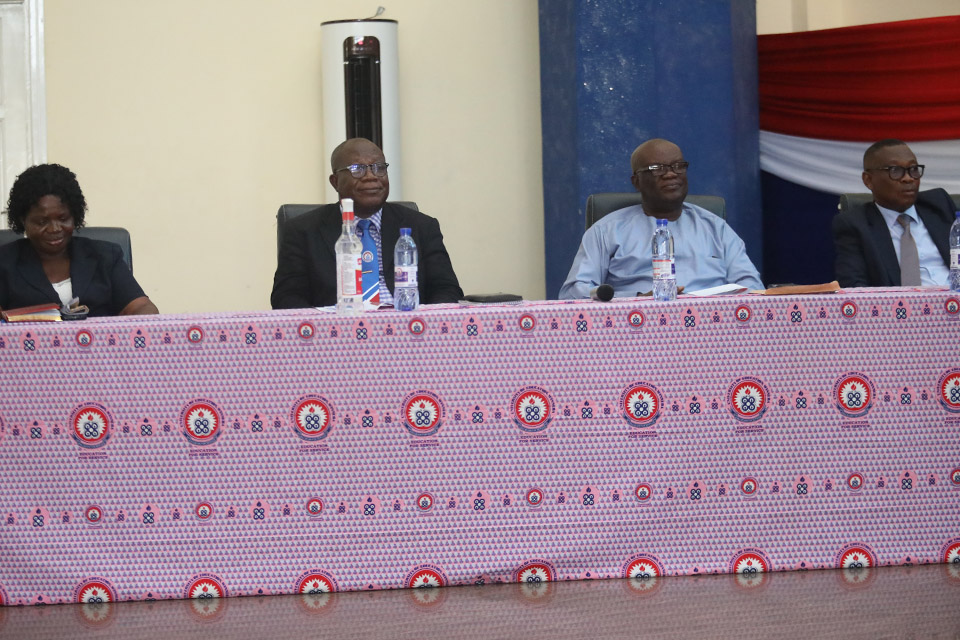
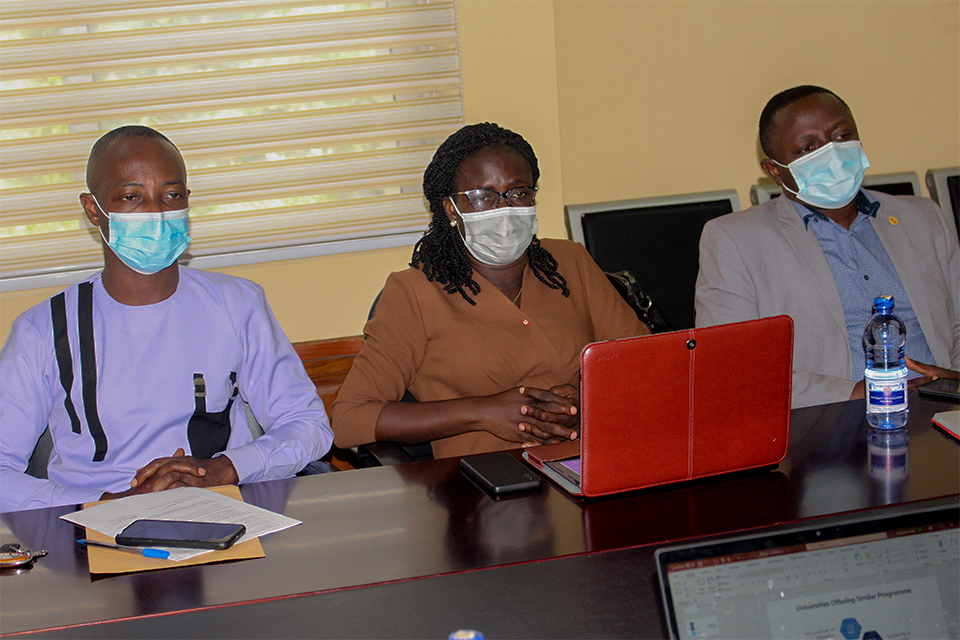
The meeting, held at the Council Chamber on Friday, 13th February, 2026, marked the conclusion of a five-year cyclical institutional review conducted across the Winneba and Ajumako campuses. The assessment focused on library systems, physical infrastructure, safety standards, accessibility, land documentation and overall institutional facilities.
The GTEC team, consisting of Dr. Kwabena Osei Kuffour Adjei and Dr. Evans Osman Asigri, expressed profound appreciation to the Vice-Chancellor, Prof. Stephen Jobson Mitchual and the University Management for their cooperation and transparency throughout the exercise. According to the library assessor, the team received exceptional support at every stage of the review, describing the collaboration as both professional and facilitative.
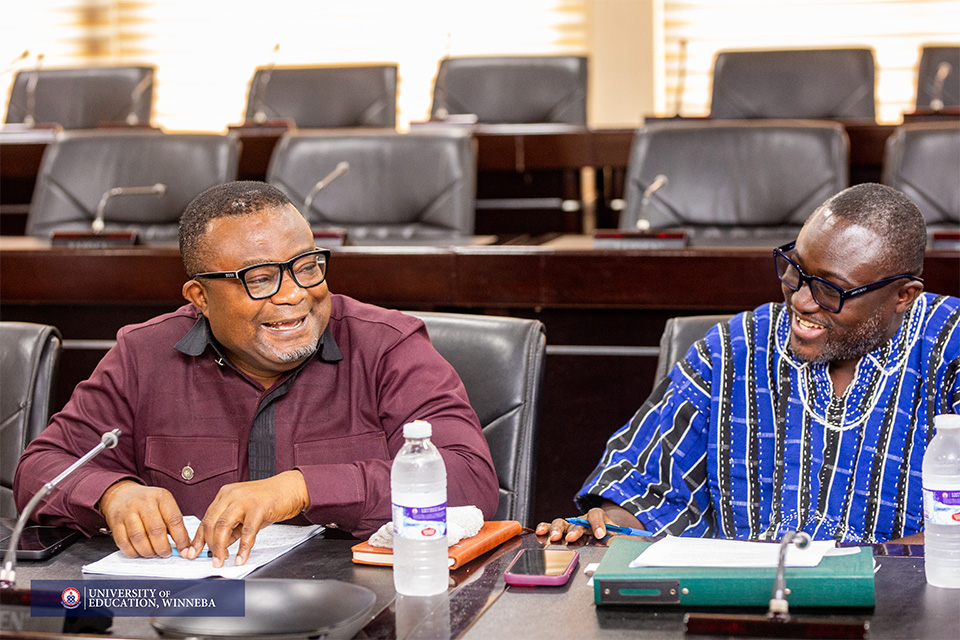
One of the most outstanding features identified during the assessment was UEW’s purpose-built Braille Library dedicated to inclusive education. The assessors noted that, among several institutions visited—including leading public universities—the facility stands out as unique and exemplary.
The equipment, organisation and overall design of the Braille Library were described as “top notch,” earning strong commendation from the review team. The facility reflects UEW’s long-standing commitment to inclusive education and equitable access to learning resources for persons with disability.
At the Ajumako Campus, the team was particularly impressed with the Faculty Block, which incorporates disability-friendly washrooms and alternative access routes to classrooms. The building was intentionally designed to promote accessibility, demonstrating thoughtful planning in newer infrastructure developments.
The assessors also lauded several modern facilities across the campuses. The iconic Students’ Centre at the North Campus attracted special admiration for its architectural appeal, functional ramp systems and well-designed student relaxation spaces. Circular seating areas integrated around trees were singled out as innovative and aesthetically pleasing.
Student support services, including the University’s radio and television production studios, were described as well-resourced and practically oriented. The team had the opportunity to observe live academic production activities, describing the experience as both insightful and professionally enriching.
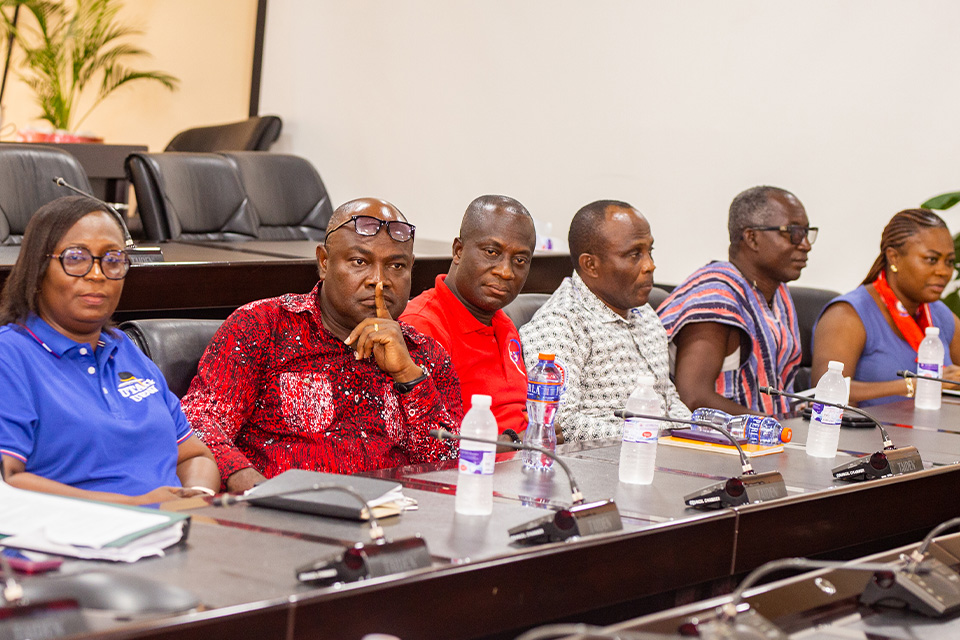
Lecture theatres such as the Kojo Baah-Wiredu Lecture Theatre were commended for their functionality and spatial organisation, while the University Hospital was characterised as a state-of-the-art facility with excellent design standards and modern medical spaces.
The heritage Institute for Educational Research and Innovation Studies (IERIS) Building, retrofitted to meet contemporary functional standards while preserving its historic integrity, also earned praise. The assessors described the seamless integration of old and modern architectural elements as impressive and instructive.
The South Campus was also acknowledged for its distinctive modernist architectural features and tourism potential. Members of the review team noted the cultural and heritage value of the site, describing it as a space capable of attracting academic tourism and historical interest if strategically developed.
While commending the University for its infrastructural strides and innovative facilities, the GTEC team provided constructive feedback to enhance operational efficiency and regulatory compliance.
Key recommendations included addressing staffing gaps within the University libraries to enhance service delivery, updating the institutional master plan, improving preventive maintenance scheduling, renewing expired fire extinguishers, strengthening cleaning regimes in high-traffic areas and enhancing disability accessibility in some older buildings.
Concerns were also raised regarding the need for comprehensive land documentation for certain campuses and minor infrastructural defects such as broken tiles, ceiling leakages, damaged fittings and the absence of directional emergency signage in some facilities. The team encouraged Management to prioritise these areas to align fully with regulatory norms.
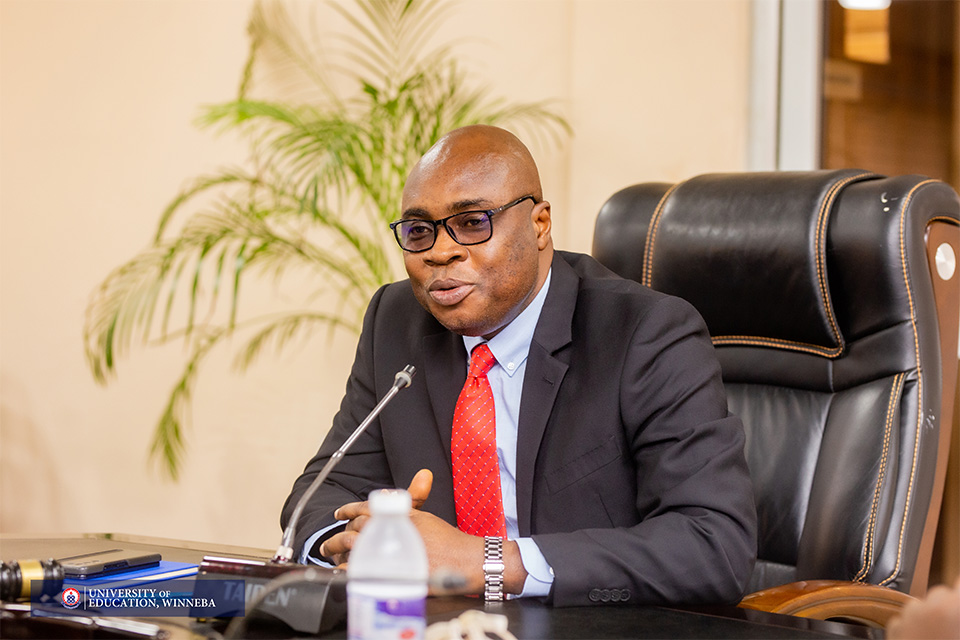
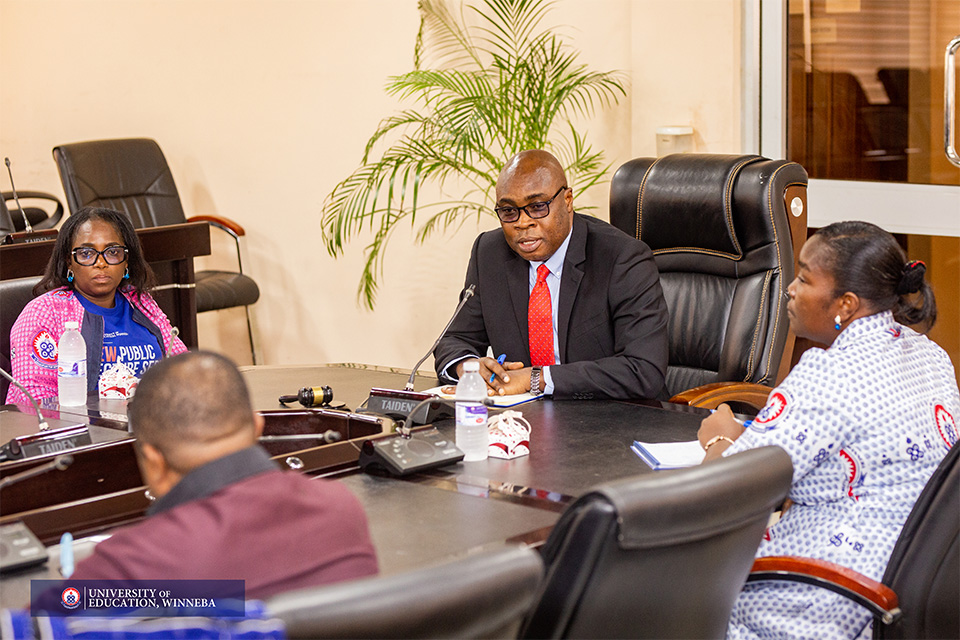
In his response, Prof. Stephen Jobson Mitchual, the Vice-Chancellor, thanked the GTEC team for what he described as honest, objective and progressive feedback. He emphasised that excellence is a continuous journey rather than a fixed destination, noting that the University welcomes constructive critique as a catalyst for growth. According to him, feedback from external assessors provides valuable insight that supports reflective leadership and institutional advancement.
Prof. Mitchual assured the team that Management has taken note of both commendations and recommendations and will work closely with the Directorate of Works and Physical Development, the Estate Section and relevant offices to develop actionable plans to address the identified gaps. He particularly stressed the importance of resolving land documentation issues and strengthening maintenance systems across campuses.
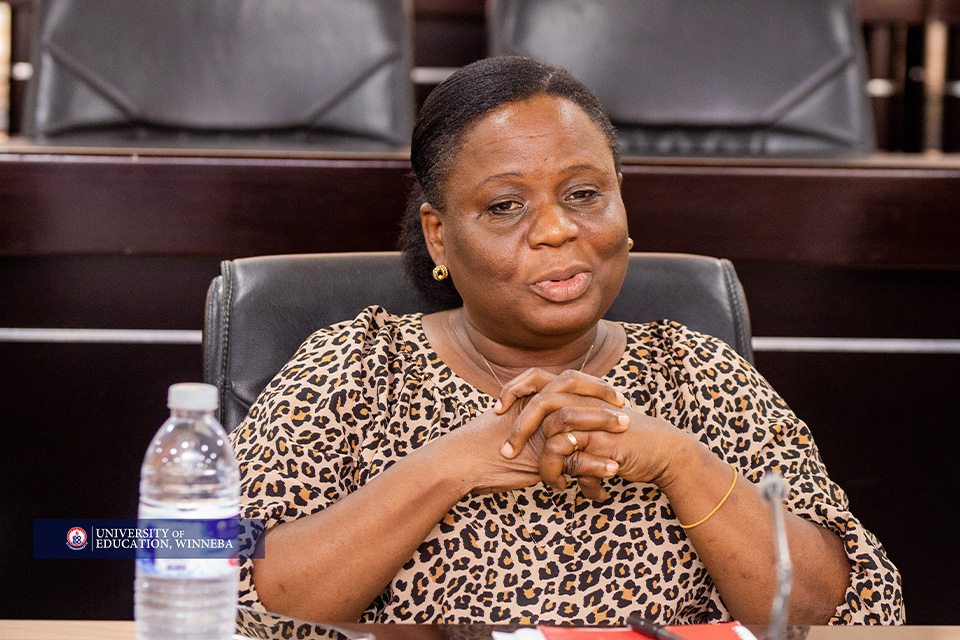
Arc. Grace Oppong Peprah, Director of Works and Physical Development, indicated that ongoing retrofitting projects and new building designs already incorporate many of the recommended standards, assuring the team that the University is on course to meet regulatory expectations with time and sustained investment.
The institutional review exercise not only highlighted UEW’s significant achievements in inclusive education, modern infrastructure and student-centred facilities but also provided a strategic roadmap for further improvement. With Management’s demonstrated openness to reform and its proactive infrastructural investments, the University of Education, Winneba, continues to position itself as a forward-looking institution committed to quality assurance, regulatory compliance and academic excellence.