UEW Champions Effective STEM Education as Catalyst for National Development


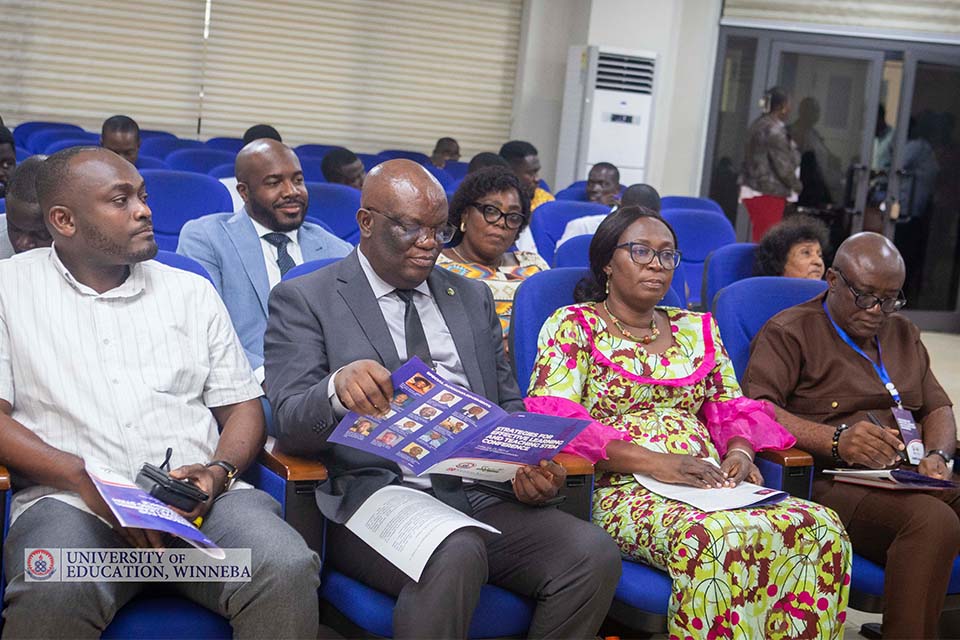
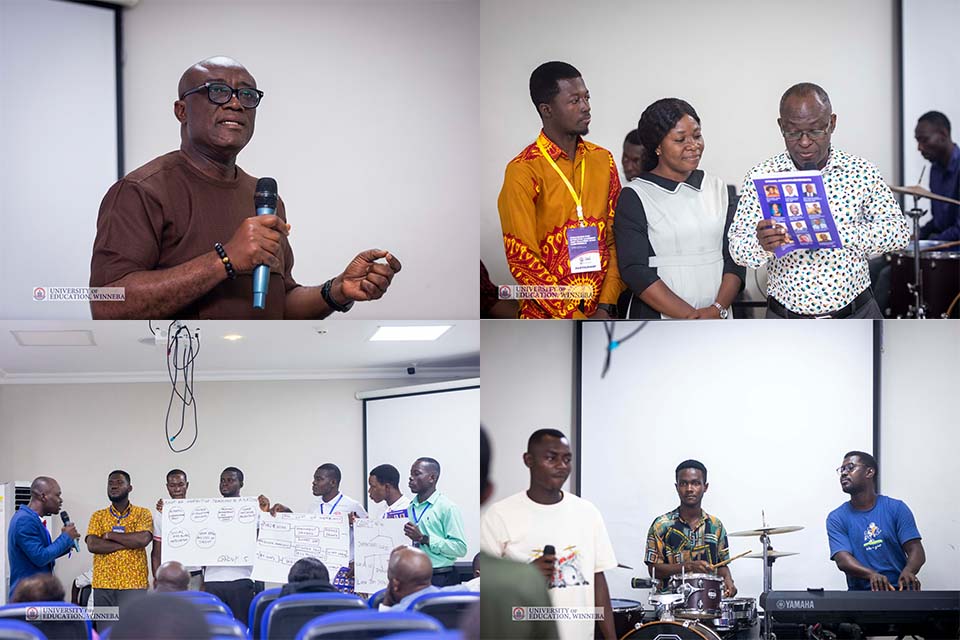
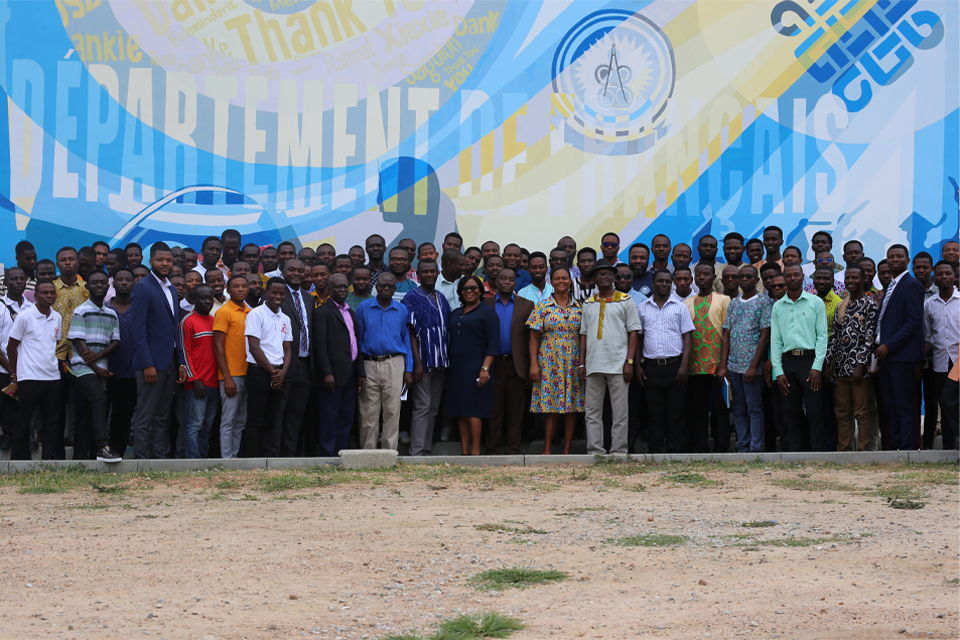
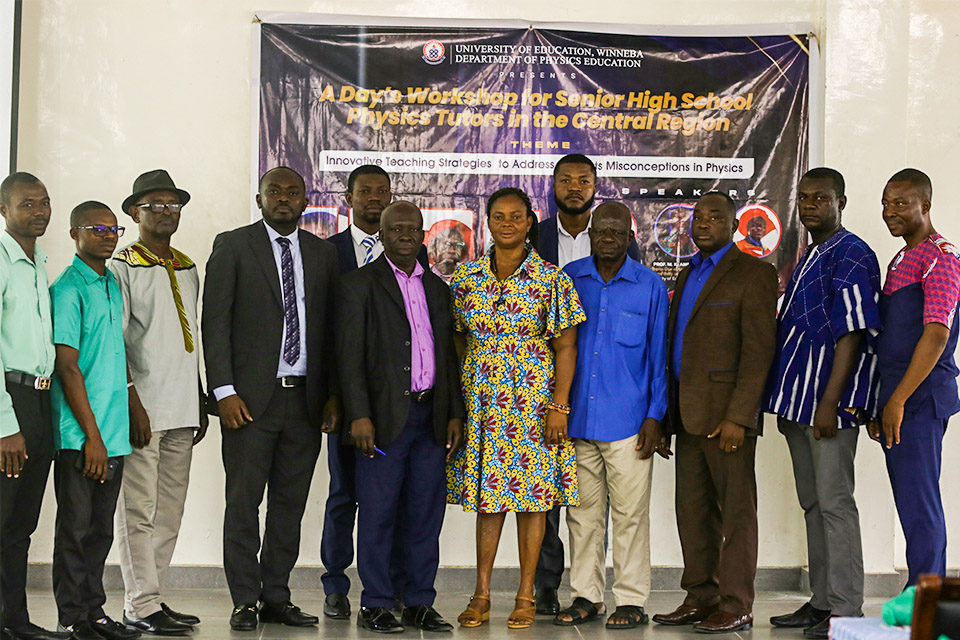
The University of Education, Winneba (UEW), hosted an academic conference themed “Effective Teaching and Learning Strategies in STEM Education” at the Students Centre Seminar Room III on Friday, 25th July, 2025.
The event gathered education experts, researchers and entrepreneurs from Ghana and abroad to explore innovative approaches to science, technology, engineering, and mathematics (STEM) instruction.

Representing the Pro-Vice Chancellor of UEW, Prof. Emma Sarah Eshun, Deputy Director of the Directorate of Quality Assurance, welcomed participants to what she called “a timely and engaging dialogue,” aligning with UEW’s vision of producing graduates equipped to meet the contemporary needs of Africa and the global community. She highlighted the importance of integrating AI tools and modern teaching methods to improve the future of STEM education.
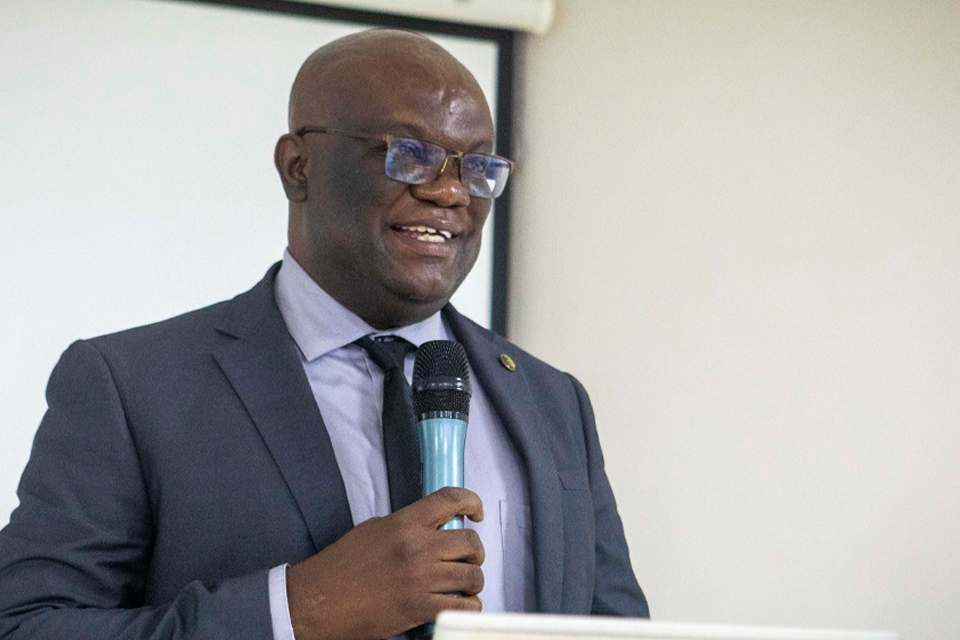
Delivering the keynote address, Prof. Victor Antwi, immediate past Pro-Vice Chancellor of UEW, stated that STEM education is not a luxury but a necessity for both the nation and the continent. He noted that countries like Singapore, Finland and South Korea had heavily invested in early STEM education combined with critical thinking and innovation.
“This is a path Africa and Ghana must follow to keep pace with global development. We must move away from rote memorisation to conceptual understanding. Science must be localised and applied, not abstract and foreign. Effective STEM teaching should connect with real-life problems, especially those within our communities,” he stressed.
Prof. Antwi called for increased investment in teacher development, digital resources and context-based curricula. He also emphasised the potential of simulations, AI tools and peer collaboration to enhance learner outcomes.


Mr. Kwame Akowuah and Mr. Zikora Okafor, co-founders of Tri-City Business Services in Michigan, USA, approached from an economic perspective by quantifying the cost of ineffective teaching. Using real data, they demonstrated how teacher absenteeism, exam-focused learning, and lack of subject mastery have caused significant human capital loss in Ghana.
“Each year of ineffective learning reduces a student’s lifetime income by up to 10%. That is not just personal loss; it is a national economic crisis,” Mr. Akowuah explained. Their findings suggest Ghana could be losing billions annually in future earnings due to poor teaching outcomes, which they termed a “silent tax on national growth.”
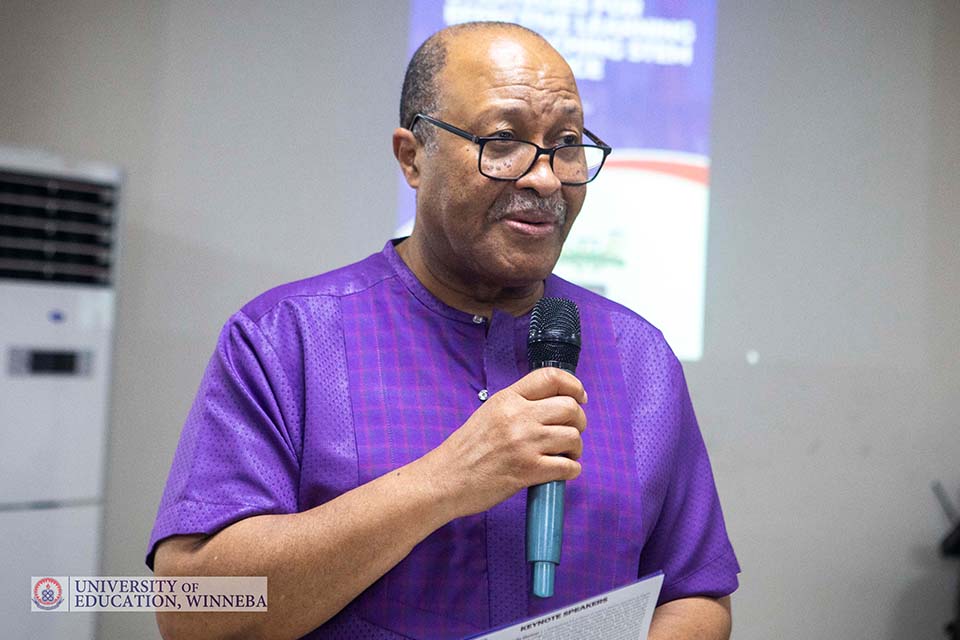
Prof. Joseph Ofori-Dankwa, chair of the conference and faculty member at Saginaw Valley State University, highlighted the inspiring power of excellent teachers. “If you are a bad teacher, you are cursing a generation. But if you are effective, you are raising a nation,” he said, urging trainee educators to recognise their transformative role.

The event also celebrated educational excellence, honouring Dr. John Francis Annan, a respected UEW lecturer whose mentorship has profoundly influenced students and fellow educators alike. Alumni praised his dynamic teaching style, patience and dedication, describing him as “a teacher who not only explained the subject but taught us how to be better people.”

The international guest speaker, Prof. Jazlin Ebenezer of Wayne State University, introduced relational teaching strategies and the Common Knowledge Construction Model, urging educators to centre their lessons around students’ lived experiences. “Teaching is not about delivering content; it is about awakening learning from within,” she observed.
An educational video by Mr. Manasseh Cudjoe, a Ghanaian doctoral student in the US, was also shown. In the video, he presented a relational approach to teaching and learning and the Common Knowledge Construction Model, a four-phase framework designed to transform mathematics instruction by anchoring lessons in students’ real-life experiences and advancing conceptual understanding through active participation.
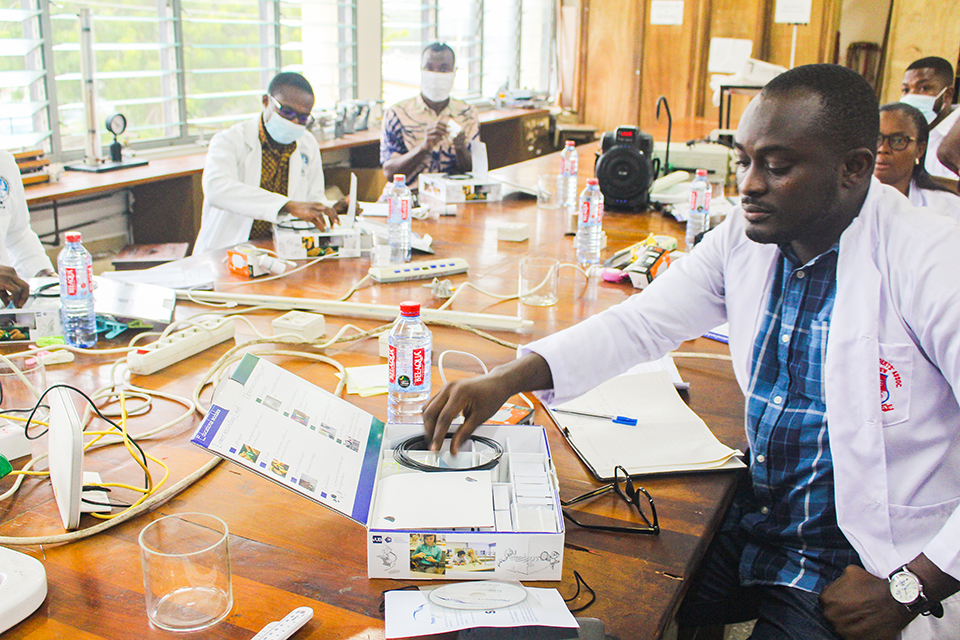
The conference concluded with workshops and team exercises where students examined the causes and costs of ineffective teaching at both individual and national levels, fostering critical reflection and innovative solutions.
The event emphasised that transforming STEM education requires not only curriculum reform but also a cultural shift from instruction-centred to student-centred approaches, from theoretical to practical methods and from isolated teaching to collaborative learning. UEW reaffirmed its commitment to leading the way in shaping the future of education in Ghana and beyond.