SACOST-UEW, Christian Atsu Centre to Empower Vulnerable Children Through STEM


The Centre for School and Community Science and Technology Studies (SACOST) under the Institute for Educational Research and Innovation Studies (IERIS) at the University of Education, Winneba (UEW) has held discussions with the Christian Atsu Educational Centre and Afram Global Organisation on a proposed collaboration to promote Science, Technology, Engineering and Mathematics (STEM) education among vulnerable children and youth.
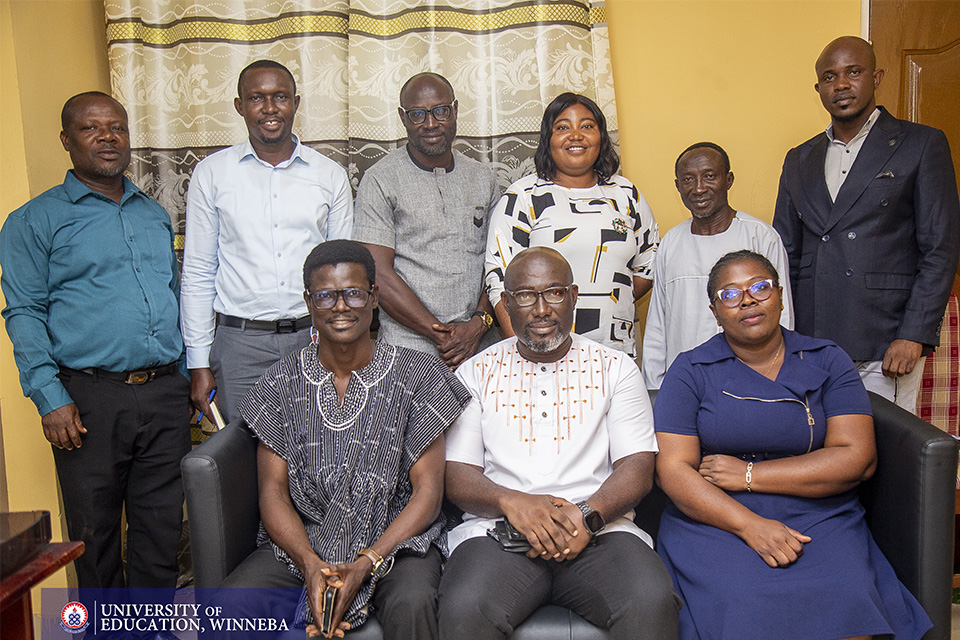
The discussions took place during a courtesy call by a delegation from the Christian Atsu Educational Centre and Afram Global Organisation on IERIS on Friday, 4th September, 2026, at the IERIS Conference Room.
The proposed collaboration centres on a three-year pilot STEM Empowerment Programme for orphans and vulnerable children and youth aged 10 to 18 in Senya, Central Region.

Prof. Peter Akayuure, the Head of SACOST, said the initiative was designed to establish a STEM hub at the Christian Atsu Educational Centre, beginning with about 40 orphans and vulnerable children. This will subsequently extend opportunities to young people in the surrounding community.
He explained that the proposed hub would operate as a Saturday academy, providing training in areas including robotics with SACOST contributing technical expertise while the Christian Atsu Educational Centre would provide the facilities and support for participating children.
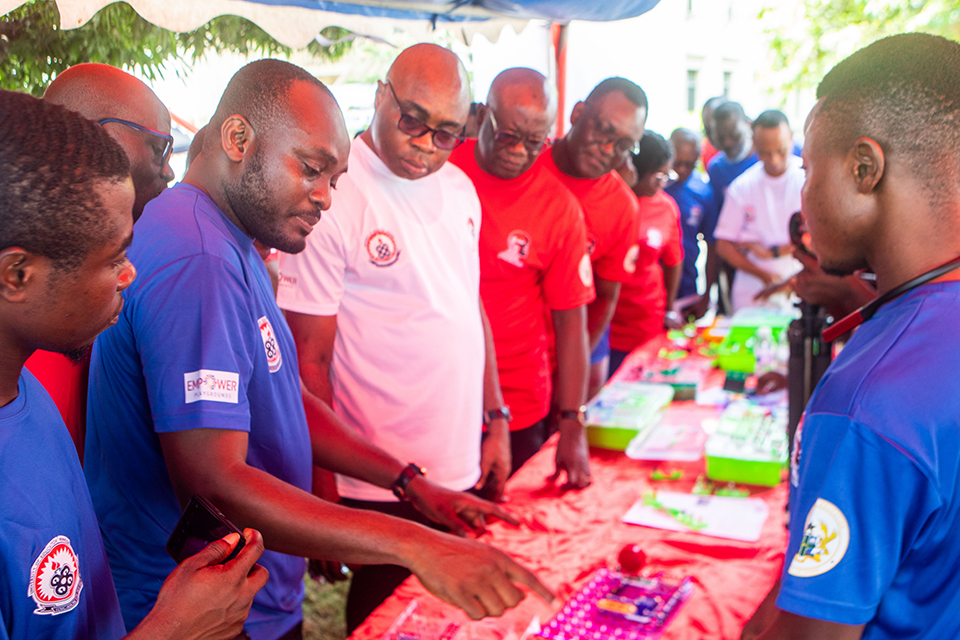
Prof. Akayuure said the initiative was inspired, in part, by SACOST’s community STEM activities where young learners had developed practical solutions to challenges in their communities, including a blind stick and a touch-free dustbin.
He noted that the proposed programme sought to address a gap in STEM initiatives by deliberately including vulnerable children who were often overlooked in mainstream policy and educational interventions.
According to him, the project was intended to serve as a model that could be scaled to other vulnerable communities across Ghana and potentially other parts of Africa.

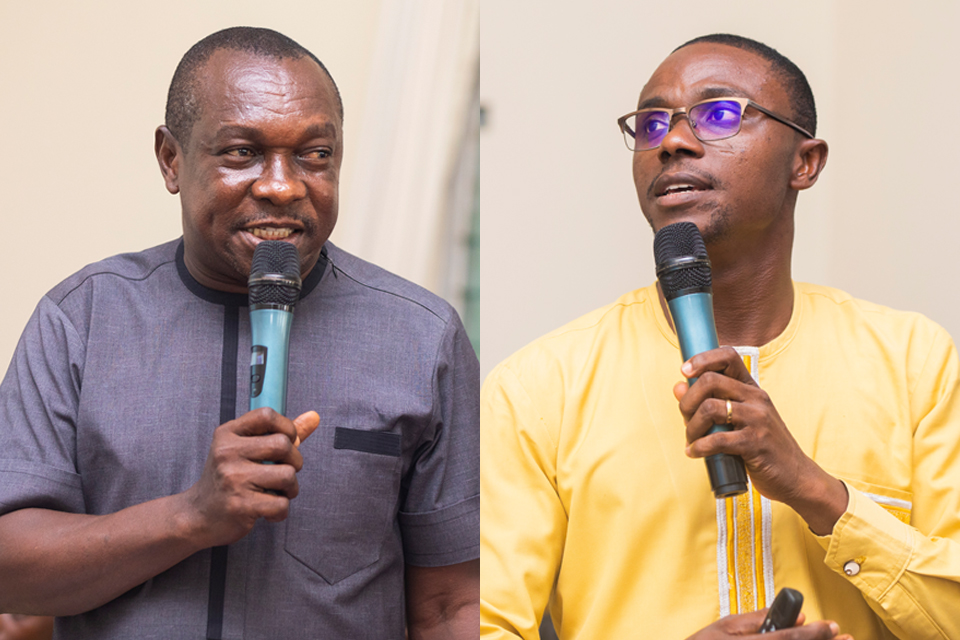
Prof. Hope Pius Nudzor, the Director of IERIS, welcomed the proposed collaboration and pledged the Institute’s support for its implementation. He said IERIS, as the research wing of UEW, could bring together its three constituent centres, namely SACOST, the Centre for Educational Policy Studies (CEPS) and the National Centre for Research into Basic Education (NCRIBE), to contribute expertise to the initiative.
Prof. Nudzor called for the development and signing of a Memorandum of Understanding (MOU) between the parties to clearly define their respective roles and responsibilities and provide a framework for implementing the collaboration.

Dr. Gloria Willingham-Toure, the Director of Afram Global Organisation, expressed support for the initiative, particularly its research-based and community-focused approach. She said she was impressed by the proposal’s positioning of the initiative as a model that could generate research evidence while producing practical outcomes for vulnerable children.
Dr. Gloria Willingham-Toure, whose organisation has worked with Becky’s Foundation and other organisations in Africa and beyond, said Afram Global could help connect promising initiatives with potential funding partners.
She stressed the importance of demonstrating clearly the project’s rationale, expected impact and potential for scalability in attracting support.
Dr. Gloria Willingham-Toure also underscored the need to place the voices and potential of vulnerable children within STEM development. She argued that young people from disadvantaged backgrounds could become significant contributors to their communities when given the necessary opportunities.

Prof. Richard Addai-Mununkum, the Head of NCRIBE, identified opportunities for research into how the Christian Atsu Educational Centre supports the academic, emotional and social development of orphaned children. He noted that such research could identify effective practices that could inform educational interventions elsewhere and strengthen the scalability of the proposed programme.

Prof. Kofi Adu-Boahen, the Deputy Director of IERIS, also encouraged the partners to explore additional institutional and external partners to support the programme and facilitate its expansion.
The meeting ended with a shared commitment to advance discussions towards formalising the collaboration.