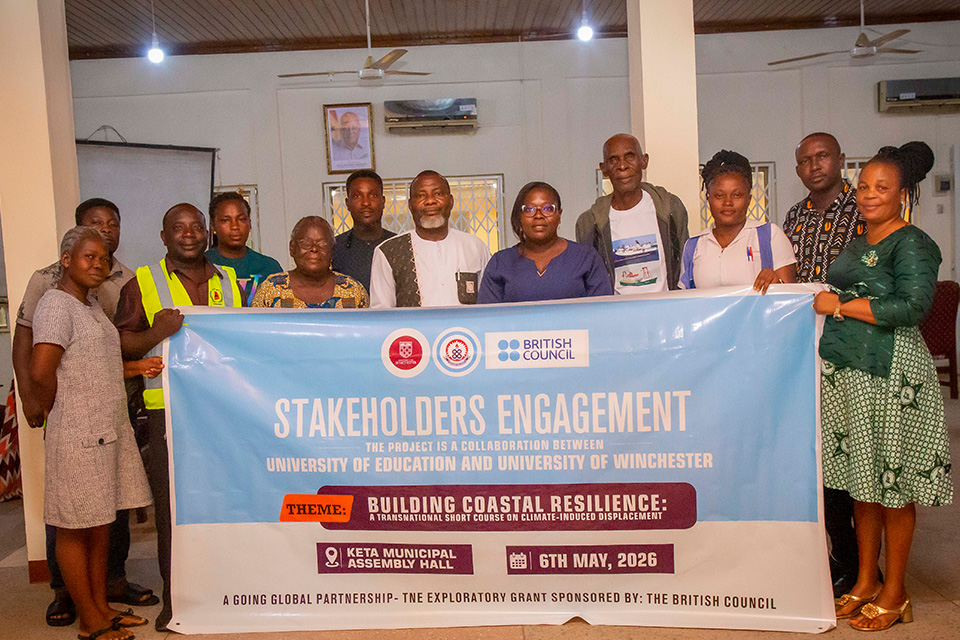
UEW, International Partners Engage Ada Stakeholders on Climate-Induced Displacement


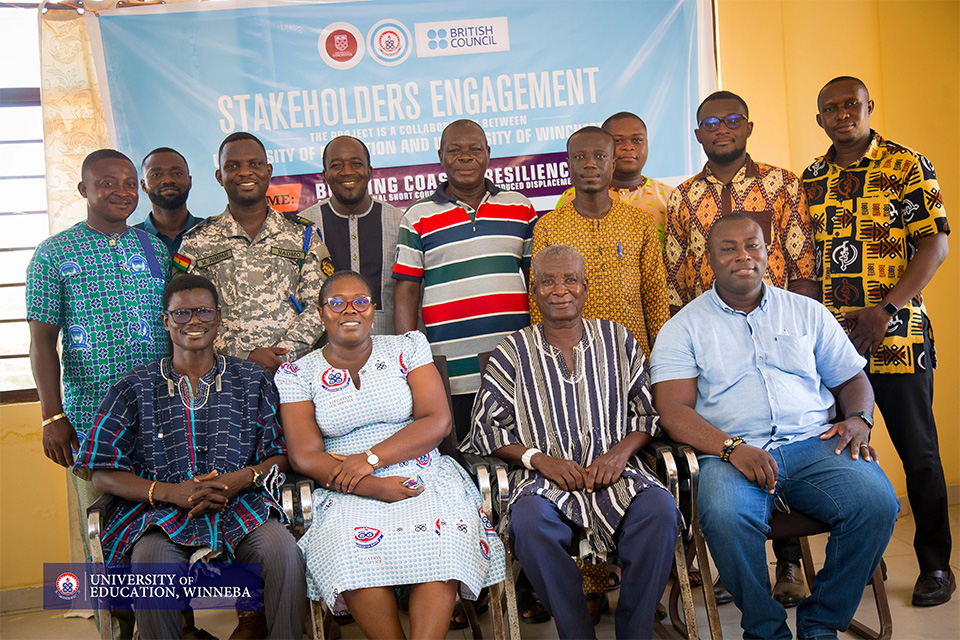
A research team from the Centre for School and Community Science and Technology Studies (SACOST) at the University of Education, Winneba (UEW) has interacted with key stakeholders in the Ada East District.
The engagement is part of efforts to develop a short transnational course focused on climate-induced displacement and coastal resilience. This initiative is being conducted in collaboration with the University of Winchester and is sponsored by the British Council's Transnational Education (TNE) Grant.
The stakeholder roundtable engagement, held at the Ada East District Assembly Conference Room on Tuesday, 5th May, 2026, formed part of the project themed, “Building Coastal Resilience – A Transnational Short Course on Climate-Induced Displacement.” The meeting sought to gather firsthand experiences from communities severely affected by coastal erosion, tidal waves and flooding along Ghana’s coastline.
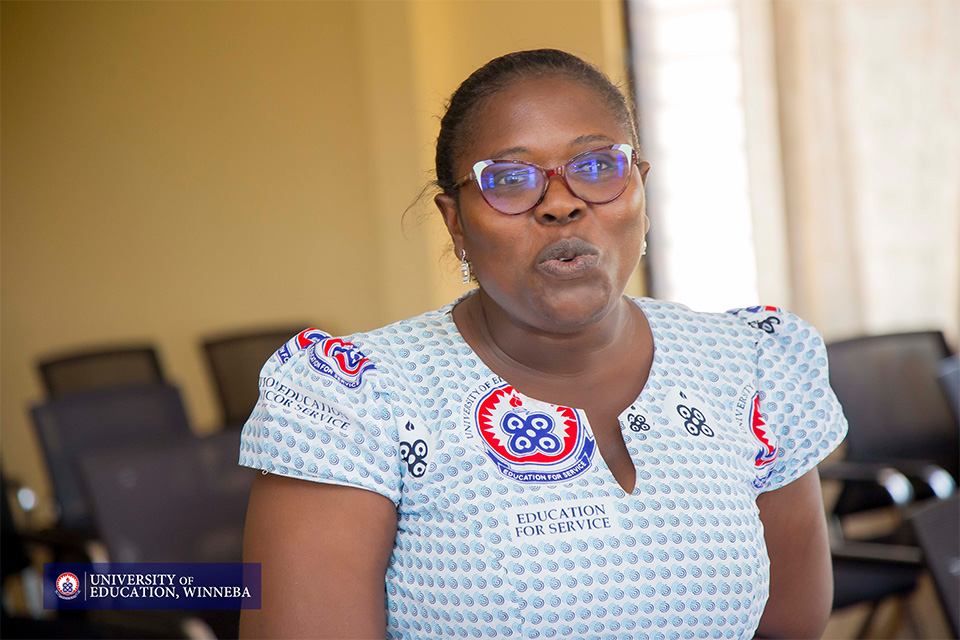
Addressing participants, Dr. Ethel Addae, the Ghana Project Lead, explained that the initiative was intended to bridge the gap between academic theory and the lived realities of vulnerable coastal communities.
She observed that Ghana’s more than 500-kilometre coastline, stretching from Aflao to Cape Three Points, continues to experience severe environmental challenges, including coastal erosion, sea level rise and destructive tidal waves which have displaced communities, destroyed infrastructure and disrupted livelihoods.
Dr. Ethel Addae stressed that although climate change is widely discussed in classrooms, students often lack practical exposure to the realities confronting affected communities. She noted that the stakeholder engagement would provide researchers with accurate community-based knowledge to enrich postgraduate teaching and research on climate adaptation and resilience.
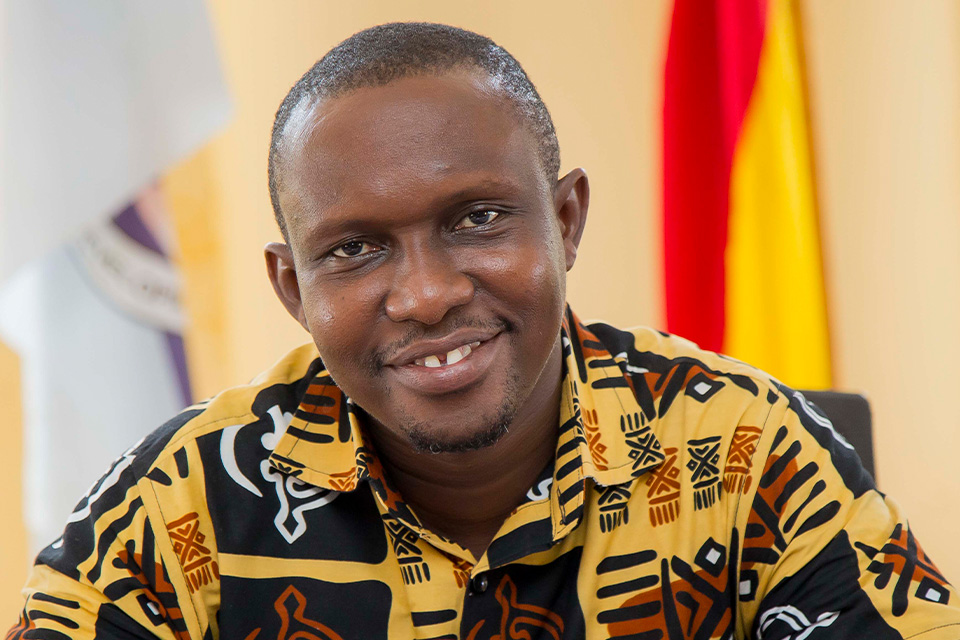
Dr. Victus Kumazah, project team member, also explained that the information gathered from stakeholders would contribute to the development of a practical and responsive course capable of equipping future professionals with the knowledge required to address climate-induced displacement and coastal vulnerability.
Participants during the roundtable discussion painted a grim picture of the worsening environmental situation in the Ada enclave. Community representatives disclosed that several communities experience severe tidal waves and flooding at least three to four times annually, particularly between July and September.
According to stakeholders, previous sea defence interventions have failed to provide lasting solutions with some describing portions of the infrastructure as temporary measures that did not adequately address the extent of coastal erosion in the area.
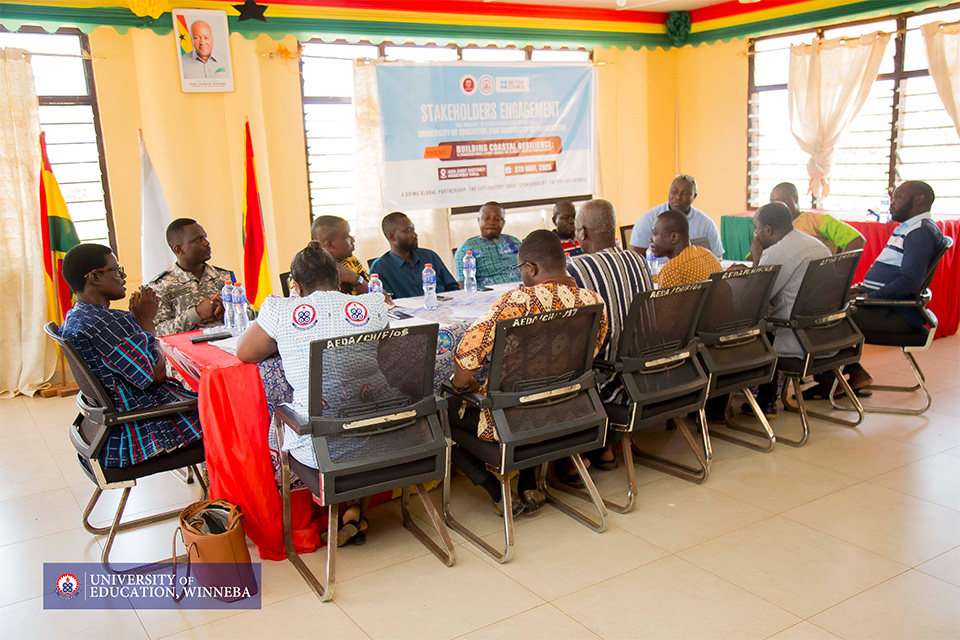
Residents explained that entire communities have gradually been consumed by the sea, forcing repeated displacement of families whose former homes now lie underwater. Fishing communities including Azizanya, Azizakpey and Otrokpe were identified among the severely affected areas.
Stakeholders further indicated that the environmental changes have disrupted fishing activities and worsened economic conditions within the district. Fishermen now travel farther offshore at higher operational costs due to declining fish stocks and dangerous sea conditions while accidents and fatalities linked to rough waters have reportedly increased significantly.
The discussions also highlighted the destruction of mangroves, damage to roads and public infrastructure and the growing difficulty of sustaining traditional livelihoods in affected communities.
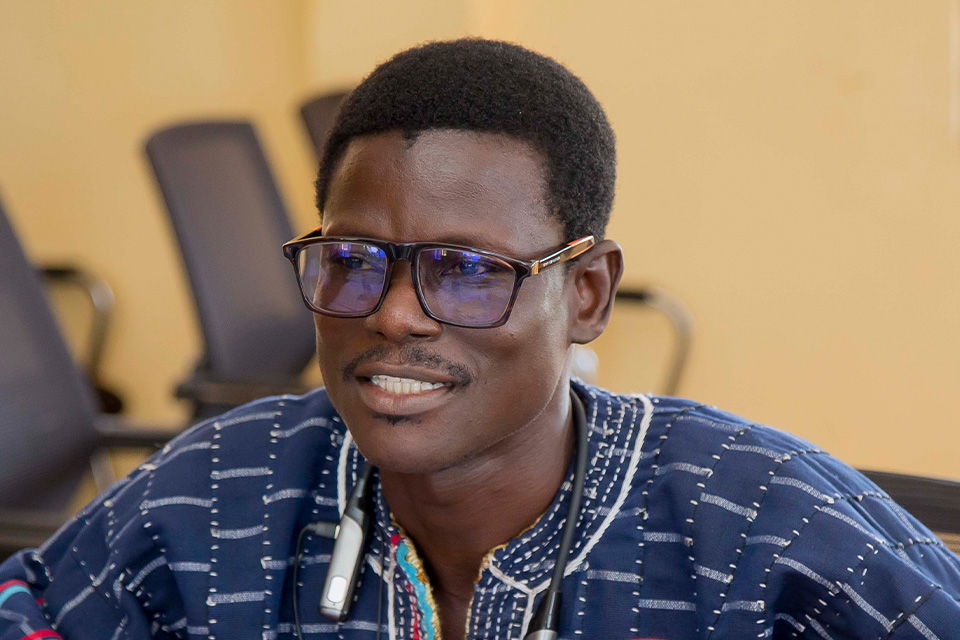
Prof. Peter Akayuure, the Head of SACOST, underscored the importance of integrating local experiences into university teaching and the global climate discourse. He explained that the project was not intended to compel communities to relocate but rather to identify sustainable ways for residents to continue living and working within vulnerable coastal environments.
He emphasised that the engagement would also help communities better understand the types of interventions and support systems that are most appropriate for their circumstances.
Prof. Akayuure revealed that the project team intends to return with students to enable them to witness firsthand the realities of climate-induced displacement and connect local experiences with broader global climate change discussions.
He further encouraged stakeholders to continuously share knowledge within their communities to strengthen local resilience and improve responses to climate-related challenges.
The stakeholder engagement formed part of SACOST’s commitment to promoting community-centred research, climate education and sustainable development through international collaboration.