DISE-UEW Inspires SHS Students Through Hands-On Chemistry Outreach


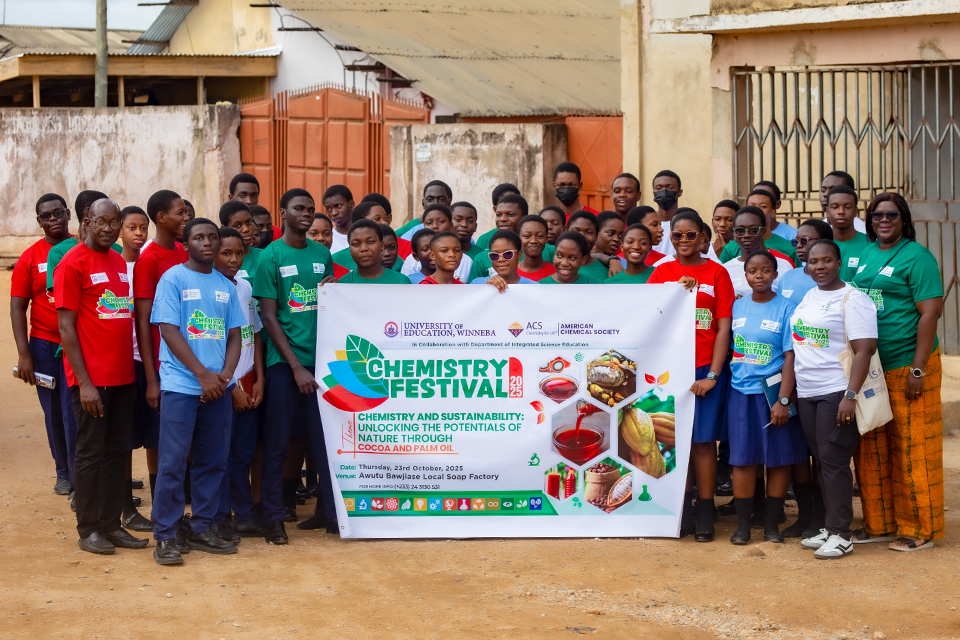
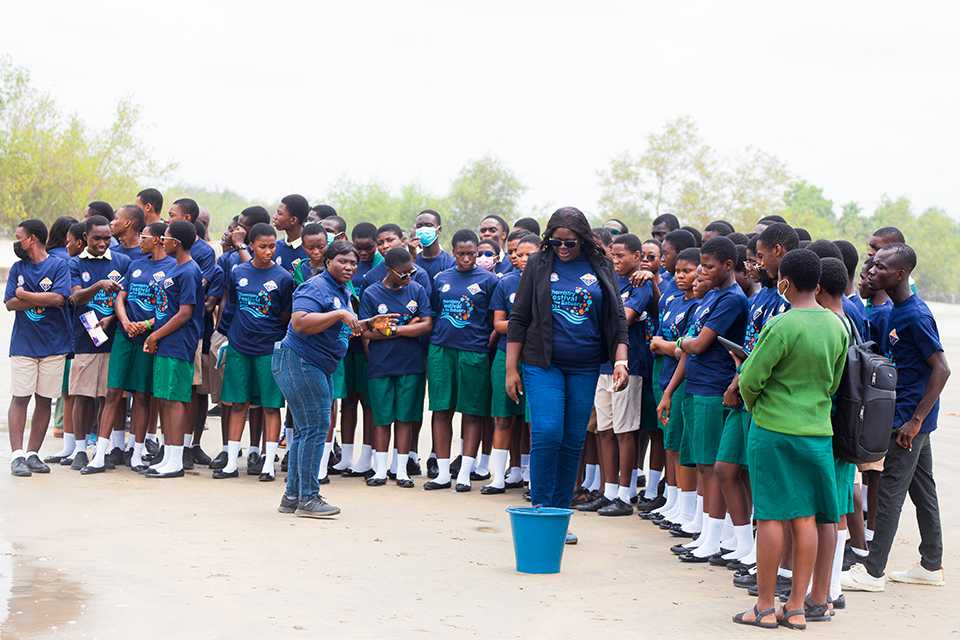
The Department of Integrated Science Education (DISE) at the University of Education, Winneba (UEW), on Thursday, 23rd October, 2025, organised a chemistry outreach programme for final-year students of St. Brother Andre Senior High School in the Central Region of Ghana.
The event, held under the auspices of the University’s Annual Chemistry Festival, took the learners to the B.S.A. Alata Soap Production Company in Awutu Bawjiase, where they explored the scientific principles behind locally made soap.
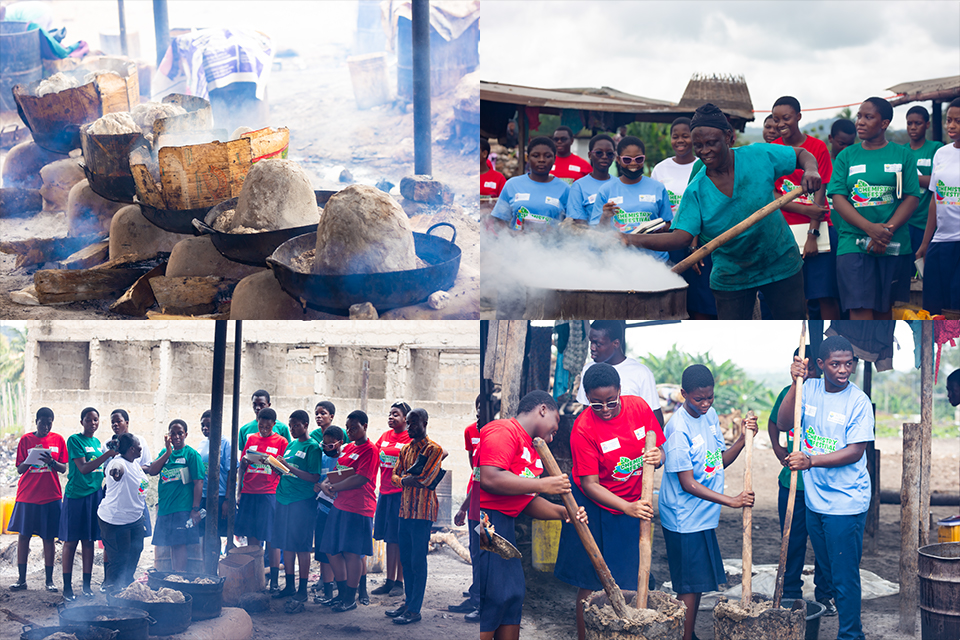
The outreach formed part of UEW’s commitment to promoting contextual science learning and inspiring interest in science, technology, engineering and mathematics (STEM) education among young learners. It sought to make chemistry concepts more relatable, linking classroom theory to real-world applications through practical demonstrations of saponification and other chemical processes involved in traditional soap-making.
Speaking during the exercise, Dr. Nelly Adjoa Sakyi-Hagan, Project Lead and Head of DISE-UEW, explained that the initiative aligns with the department’s vision of using community-based learning to strengthen science education in Ghana. She noted that the 2025 edition of the Chemistry Festival was organised under the theme, “Chemistry and Sustainability: Unlocking the Potential of Nature Through Cocoa and Palm Oil.”
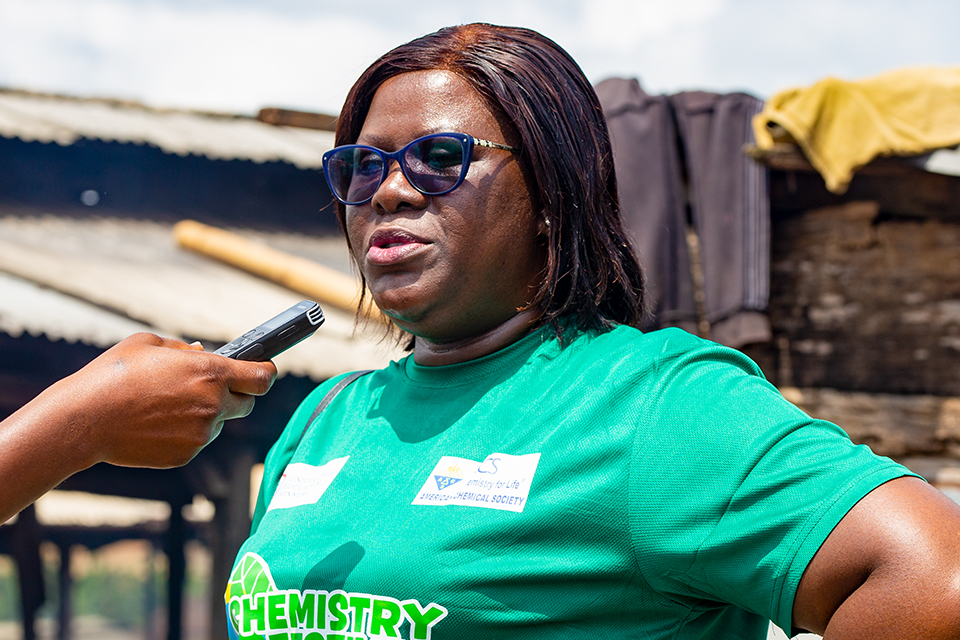
According to Dr. Nelly Sakyi-Hagan, the theme was carefully chosen to help students appreciate the chemistry behind familiar natural resources. “Chemistry, like many areas of science, can often feel abstract to students.”
She explained that the use of cocoa and palm oil, materials common in Ghanaian households, offered students a unique opportunity to understand fundamental chemistry concepts such as saponification, esterification, hydrolysis and environmental sustainability. “By bringing students to a local soap-making site, they can observe these processes firsthand. This hands-on learning approach helps them appreciate these concepts more deeply and strengthens their understanding,” she added.
Dr. Nelly Sakyi-Hagan observed that the enthusiasm and curiosity displayed by the students demonstrated the success of the initiative. “Many expressed surprise that something as common as palm oil could be used to produce soap. The questions they asked reflected curiosity and engagement. I believe we have achieved our goal of helping them connect classroom theory with practical reality,” she remarked.
She further stated that the Chemistry Festival, supported by the American Chemical Society (ACS), is guided by the ACS motto “Chemistry for Life.” “Through this initiative, students not only observe scientific processes but also appreciate the effort and labour that go into producing the materials we use daily. Learning is most effective when knowledge is transferable and I am confident that this festival will deepen their understanding and inspire them to approach science with curiosity and creativity,” she concluded.

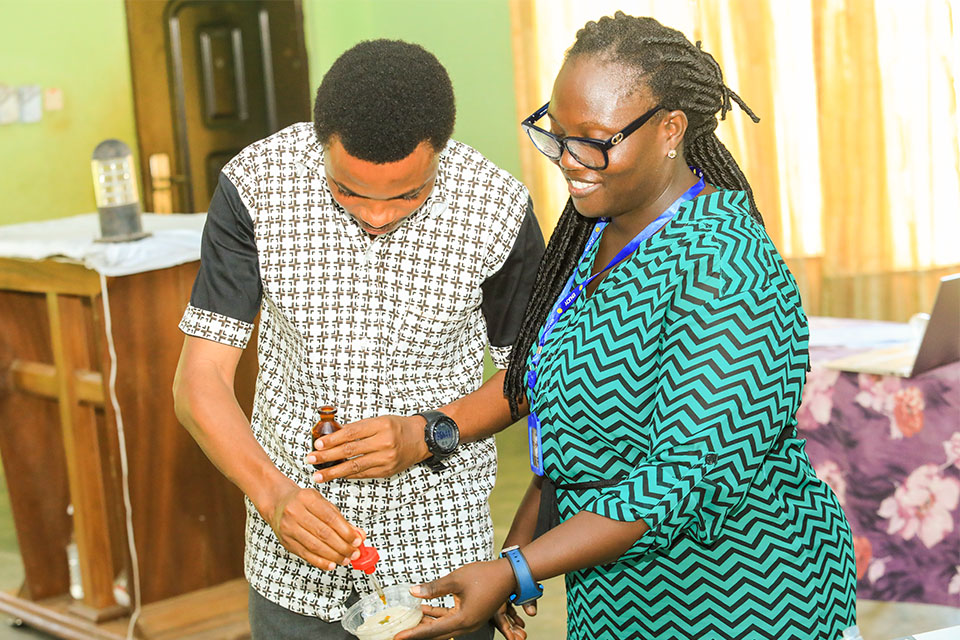
Dr. Charity Esenam Anor, a Facilitator and Project Member, provided a detailed explanation of the chemical reactions involved in soap production. She described saponification as “the alkaline hydrolysis of fat which produces soap,” and walked the students through the reaction between palm kernel oil and an alkali derived from cocoa pod ash.
“In this reaction, the fat (the oil) reacts with the potassium hydroxide (KOH) to produce the salt of the fatty acid (soap) and glycerol,” Dr. Charity Anor explained. She added that the soap produced through this traditional method is biodegradable, thus promoting environmental sustainability.
While acknowledging the benefits of local soap production, she also encouraged students to think innovatively about improving health and environmental safety in such processes. “The smoke and heat involved present health risks, so as future scientists, they must think of innovative ways to make such production more sustainable and environmentally friendly,” she advised.
Dr. Charity Anor also emphasised that soap can be made from used cooking oil to promote recycling and waste reduction. She highlighted the practical relevance of chemistry principles such as hydrolysis, esterification, exothermic reactions and rates of reaction to sustainable industrial practices.
“Chemistry is not just about equations; it is about understanding how science can improve life, support local industries and sustain the environment,” she stressed, urging the students to apply the knowledge gained beyond the classroom.

The outreach at Awutu Bawjiase offered the SHS students an immersive learning experience that brought scientific concepts to life. By observing firsthand how ordinary raw materials are transformed into useful products, the learners developed a deeper appreciation of the role chemistry plays in daily life and national development.
The Department of Integrated Science Education, through such initiatives, continues to advance UEW’s mission of promoting experiential and community-centred science education. The programme further reinforces the University’s commitment to nurturing the next generation of scientists capable of applying their knowledge to address local challenges through sustainable innovations.