UEW's Sankofa Yenkyire Exhibition Rekindles Culture, Memory and Identity


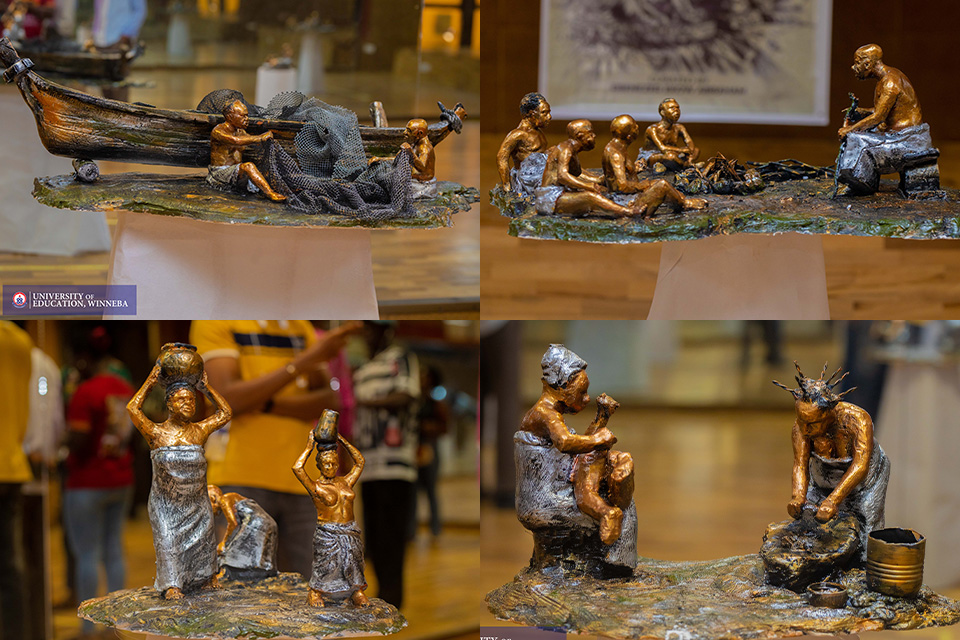
The Department of Art Education at the University of Education, Winneba (UEW) has rekindled conversations on culture, memory and identity through its Sankofa Yenkyire Exhibition.
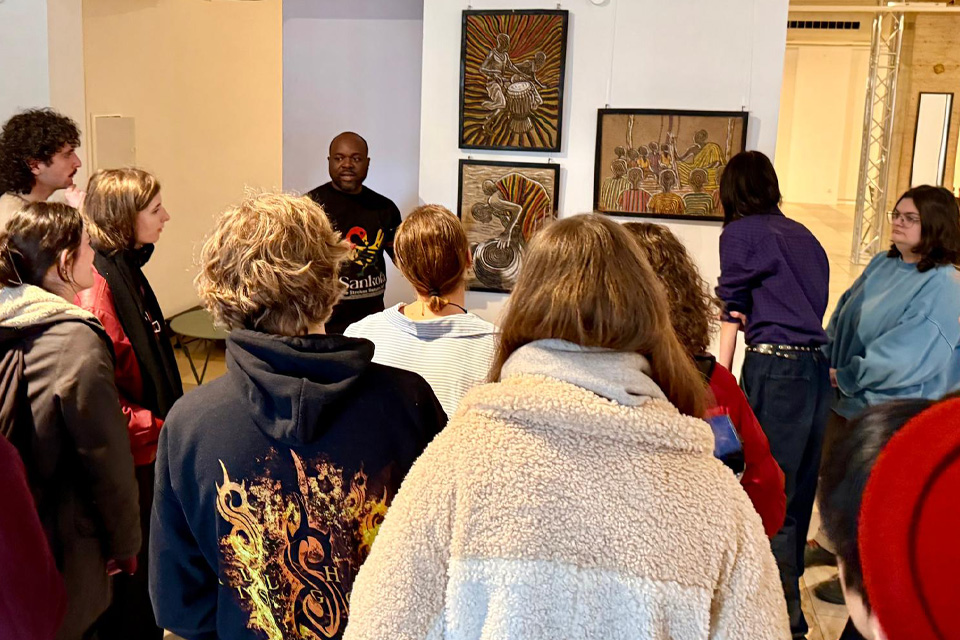
The exhibition, which attracted students, faculty members, artists and members of the public, featured sculptures and mixed-media installations inspired by the Akan concept of Sankofa, meaning “go back and fetch it,” with Yenkyire extending the concept to forgotten traditions, practices and memories.
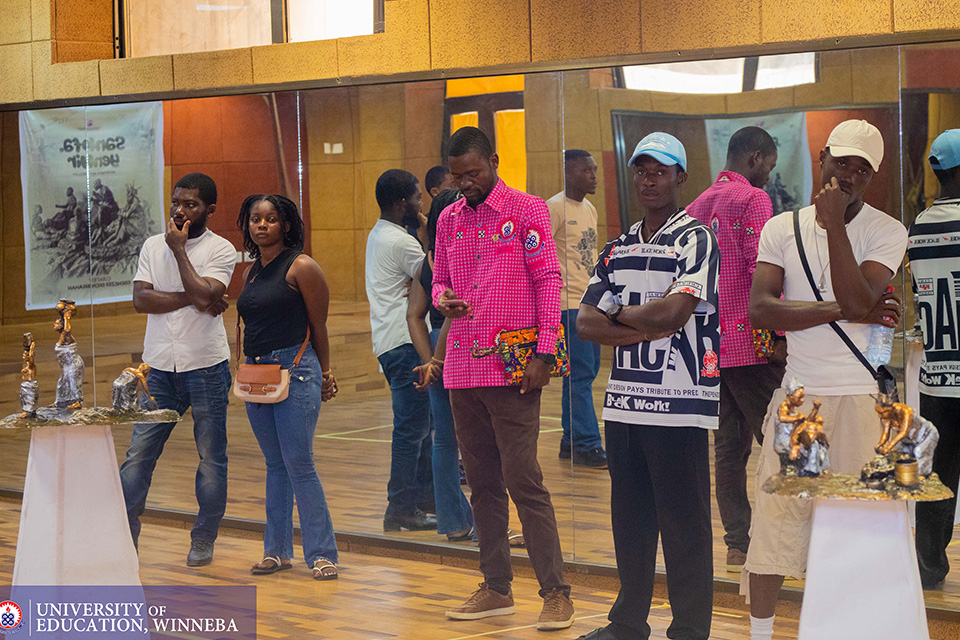
Through creative representations of familiar objects, household items and scenes from everyday Ghanaian life, the exhibition encouraged visitors to reconnect with aspects of the past and reflect on their relevance to the present and future.
Mr. Patrick Baffour, a visitor, commended the artists for their thoughtful selection of artworks and household items. He noted that the exhibits effectively connected to the exhibition’s theme. Another visitor said the exhibition broadened his understanding of sculpture, particularly the artists’ ability to use figures to tell stories about Ghana’s past.
The exhibition also evoked strong feelings of nostalgia among visitors. Cecilia G. Samba said the works reminded her of childhood experiences including stories told by parents and the early morning routine of fetching water. She described the sculptures as “very beautiful”, adding that each work told a story.
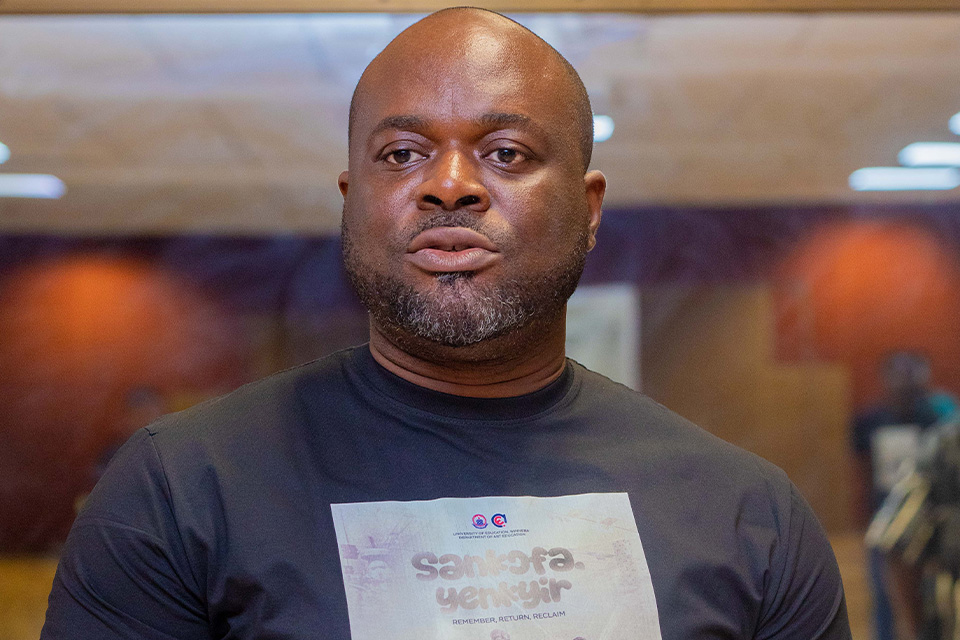
Reflecting on the exhibition's broader significance, Mr. Ebenezer Kow Abraham, the Curator, emphasised that the exhibition was conceived as more than a display of sculptural objects. It was envisioned as a platform for cultural recollection, public engagement and critical reflection on the values, practices and experiences that define Ghanaian identity.
“The multi-figure compositions, depicting elders imparting oral traditions, women engaged in communal hair-braiding rituals and figures hauling water or gathering around a hearth, position Indigenous knowledge systems as legitimate intellectual foundations for contemporary studio practice,” he said.
According to the curator, Sankofa Yenkyire aimed to create a space where visitors could reconnect with memories of community life, indigenous knowledge systems and cultural practices increasingly threatened by social change and globalisation. Through sculpture and material experimentation, the participating artists transformed everyday experiences into visual narratives that encourage the audience to recognise the importance of preserving culture and to envision memory while imagining new possibilities for the future.
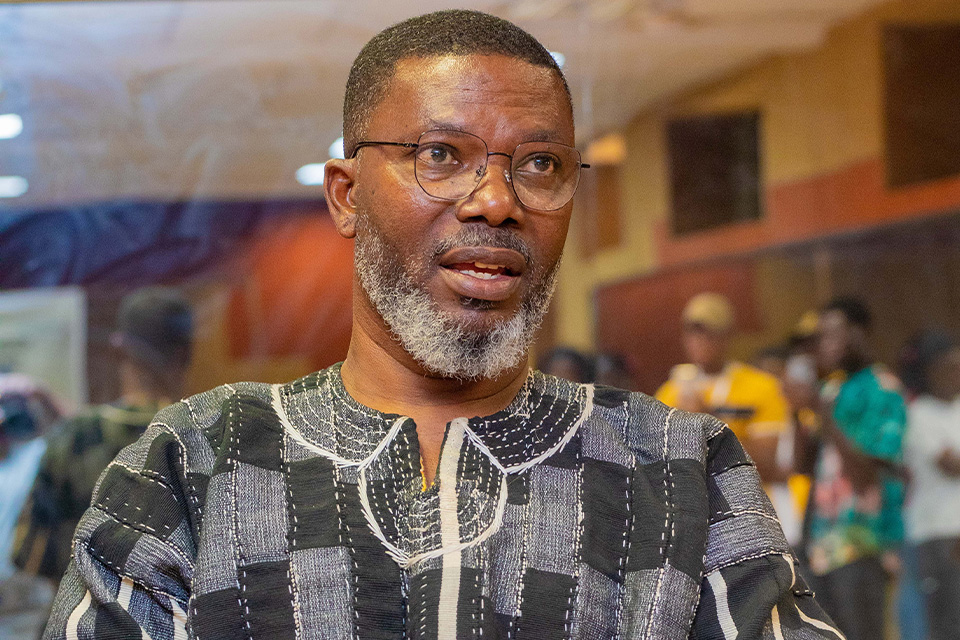
Prof. Patrique deGraft-Yankson, Director of the Centre for Research, Culture and Creative Arts (CeRCCA), commended the exhibition’s theme, describing the addition of Yenkyire to Sankofa as particularly significant.
Prof. deGraft-Yankson noted that while Sankofa had gained international recognition, the Yenkyire challenged society to move beyond merely acknowledging the past to actively retrieving and preserving what had been forgotten. “It is asking us, if returning to fetch what is vital is not a taboo, are we ready to go back for things forgotten in the past?” he asked.
He observed that although African culture and heritage were frequently discussed, there was often limited willingness to reclaim and integrate valuable aspects of the past into contemporary life. “The world is evolving and people outside Africa are getting so much interest in what we used to have in the past whilst we ourselves look down upon our culture,” he added.
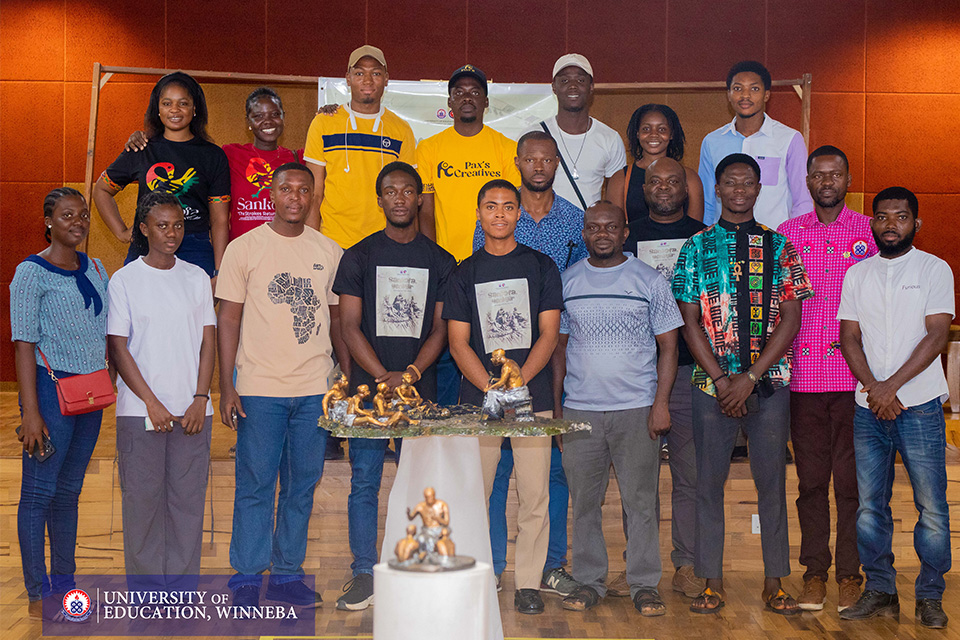
Dr. Francis Ankyiah also described the exhibition as inspiring, commending the students for their innovative use of mixed media to communicate Ghanaian cultural experiences, traditional values and collective memories.
Mr. Michael Manu-Kobia praised the students' creativity and encouraged the Department to organise more exhibitions of this kind. He also proposed complementary platforms such as Art Talks to promote deeper engagement among artists, scholars, students and the public.
Through Sankofa Yenkyire, the Department of Art Education has demonstrated how artistic expression can bridge Ghana’s cultural past and its contemporary realities. This reminds the audience that looking back can help recover knowledge and values needed to shape the future.