CCERPD-UEW Combats AI-Generated Fake News with Media Literacy Workshop


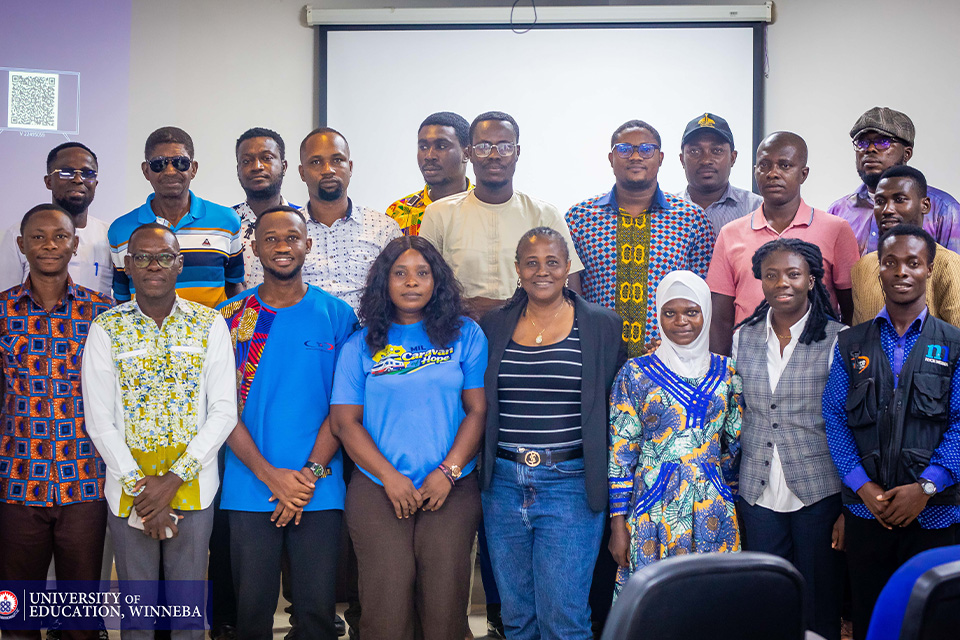
The Centre for Communication Education Research and Professional Development (CCERPD) of the School of Communication and Media Studies (SCMS) at the University of Education, Winneba (UEW) has hosted a capacity-building workshop on media and information literacy for media practitioners.
The workshop to promote ethical journalism and combat information disorder was held at the Students Centre Seminar Room III on Thursday, 7th May, 2026. It was under the theme, “Tackling Information Disorder, AI-Driven Fake News and Ethical Journalism Through Media and Information Literacy Skills.”
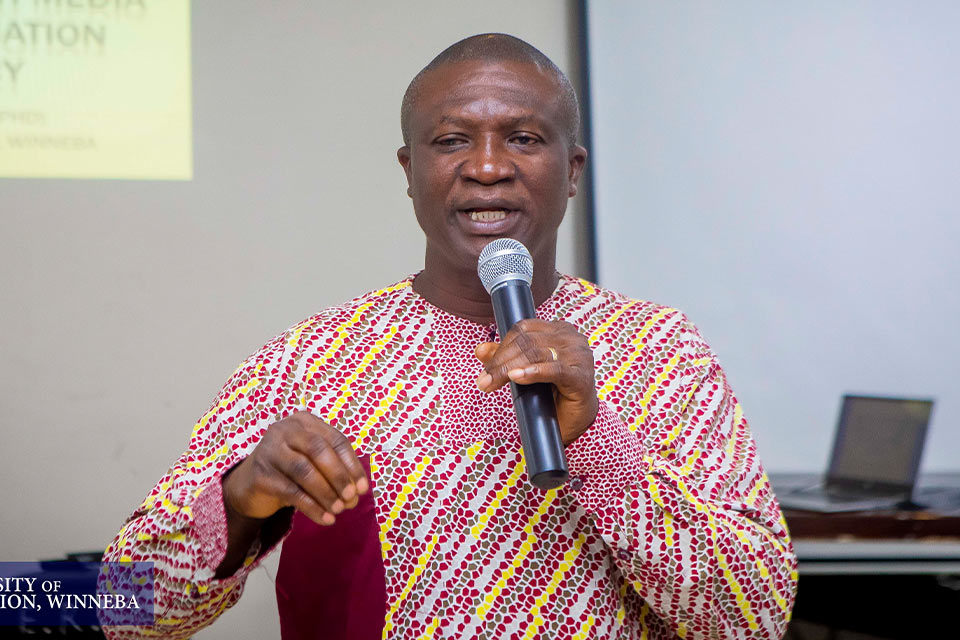
Prof. Albert Agbesi Wornyo, the Dean of SCMS, underscored the growing responsibility of journalists and media practitioners in an era dominated by artificial intelligence, misinformation and disinformation. He noted that while freedom of speech and press freedom remain central to democratic societies, they must be exercised with professionalism, ethical standards and a strong sense of civic responsibility.
Prof. Wornyo described journalism as a “dicey profession” where practitioners constantly struggle to balance truth-telling with public interest, audience expectations and community sensitivities. Drawing from his own experiences as a journalist, he recounted how truthful reports he produced in the past generated backlash from sections of the community, illustrating the risks associated with ethical journalism.
According to him, the rapid spread of misinformation, disinformation and fake news on digital platforms requires continuous engagement between academia and industry players to strengthen ethical reporting and safeguard public trust in the media. “We need to continuously engage and discuss how we can minimise misinformation and uphold truth and responsibility in journalism,” he stated.
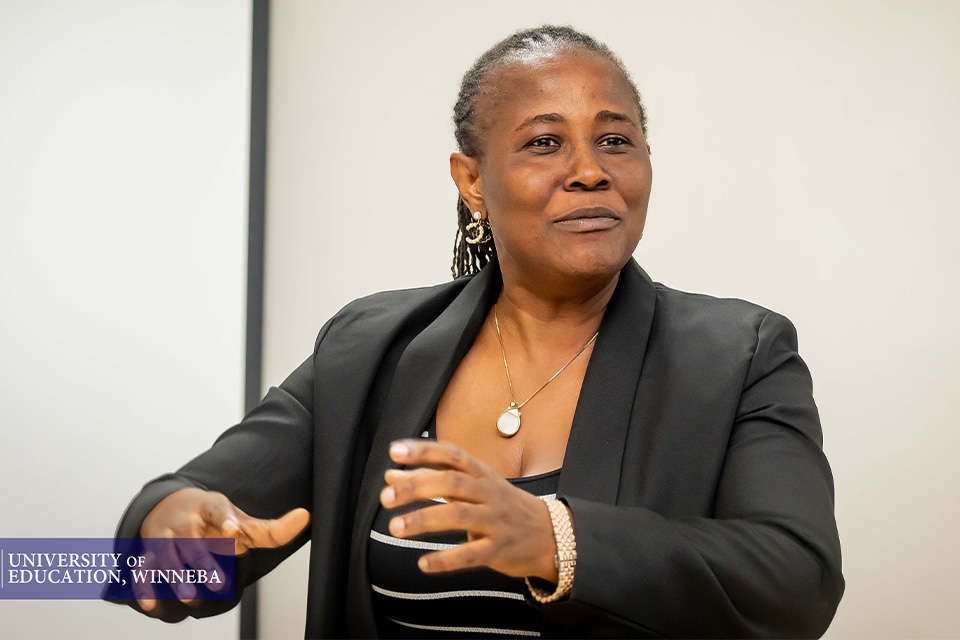
Delivering a presentation on “Tackling Information Disorder with Media and Information Literacy,” Prof. Gifty Appiah-Adjei, the head of the Department of Journalism and Media Studies, highlighted the growing threat posed by digital technologies and artificial intelligence to credible journalism. She stressed that information disorder has become one of the biggest challenges confronting the contemporary media ecosystem due to information overload and the increasing ease with which unverified content can be generated and circulated online.
Prof. Gifty Appiah-Adjei explained that unlike in the past, where editors acted as gatekeepers of information, today’s digital environment enables virtually anyone with internet access to create and distribute content without adhering to journalistic ethics or verification processes. Using practical demonstrations and interactive discussions, she illustrated how AI tools can generate highly realistic but fake images, videos and stories within seconds, making it increasingly difficult for audience to distinguish between truth and falsehood.
She cautioned journalists against relying solely on viral social media content for news production without proper verification, noting that a single inaccurate report can damage the credibility of an entire media organisation. She advocated for practitioners embracing factchecking, verification and media literacy skills as essential tools for protecting public trust and maintaining professional integrity.
The session also featured practical discussions on how fake content spreads during elections, conflicts and social debates as well as the dangers of hate speech and manipulated information in polarised societies. Participants engaged in extensive deliberations on media ethics, public perception, political communication and the responsibilities of journalists in maintaining social cohesion.
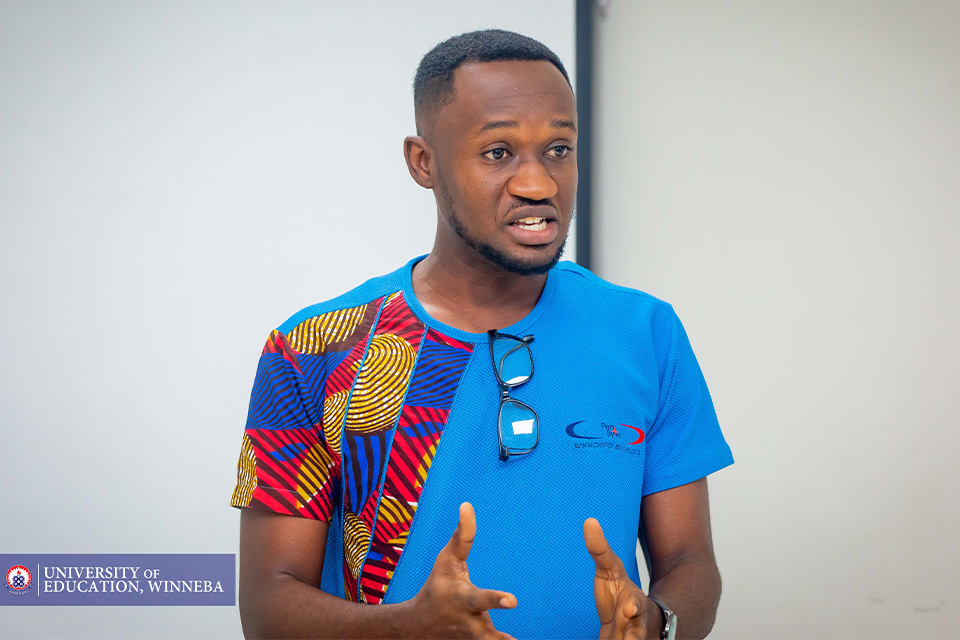
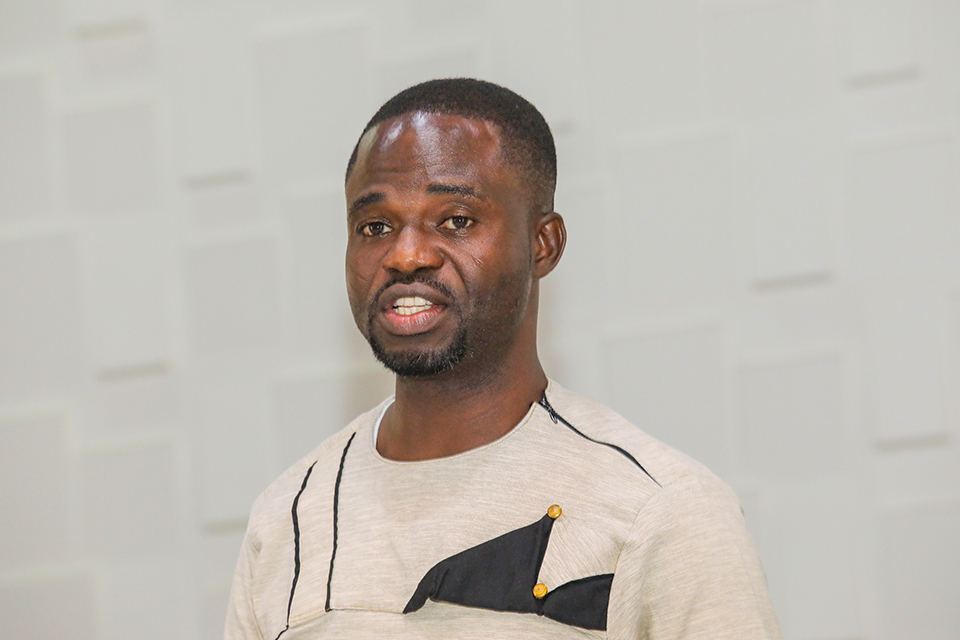
Mr. Emmanuel Koranteng Asomani, Programme Manager at Penplusbytes, highlighted the growing threat posed by information overload and the misuse of artificial intelligence in content creation. He warned that social media algorithms and AI technologies often reinforce the spread of false information by continuously feeding users with similar content based on their online interactions and preferences.
He further educated participants on the different forms of information disorder including misinformation, disinformation, malinformation and hate speech, explaining how each category influences public perception and social cohesion.
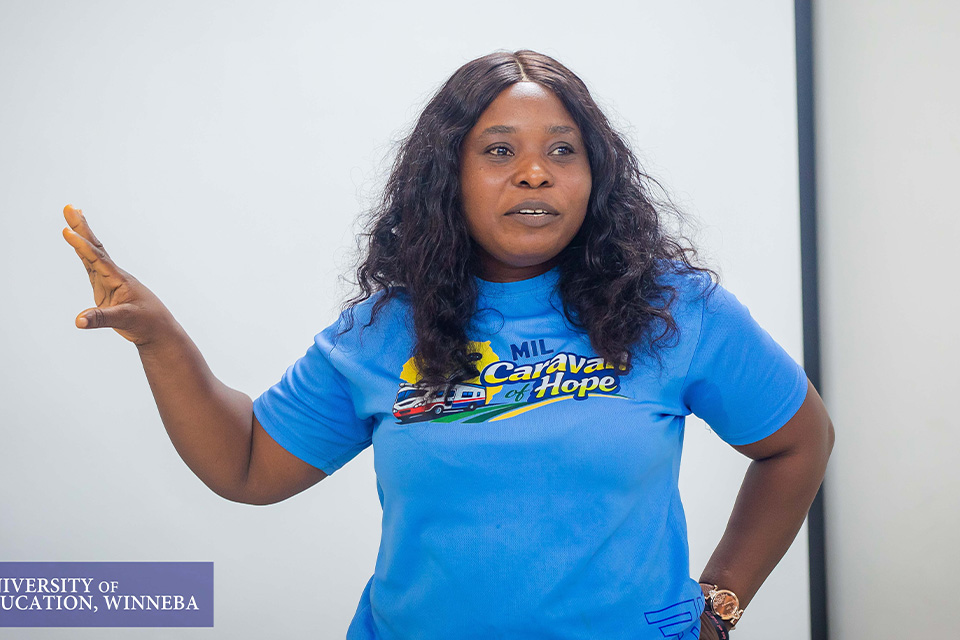
Contributing to discussions during the workshop, Miss Rebecca Avusu emphasised the importance of responsible journalism in preventing reputational damage and societal division. She noted that the media must carefully assess the context, intent and implications of information before amplifying it to the public, especially in politically sensitive situations where truthful information can still be manipulated to create harm.
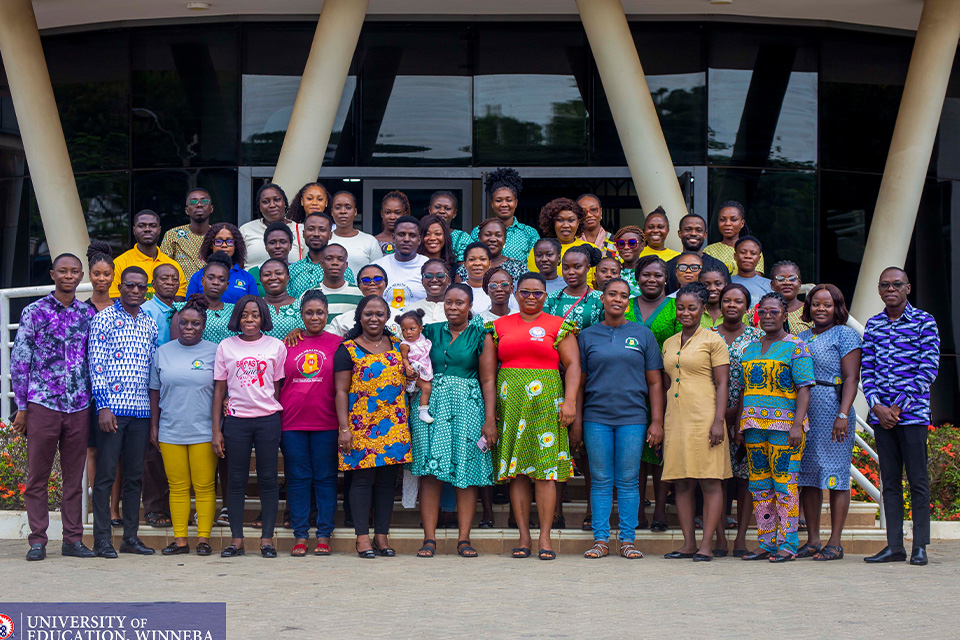
Participants engaged in interactive discussions and practical exercises aimed at sharpening their media literacy and fact-checking skills while exploring strategies for promoting ethical journalism in Ghana’s evolving digital media landscape.
The workshop forms part of SCMS’ broader commitment to strengthening professional journalism practice, promoting responsible media communication and empowering practitioners with the knowledge and skills needed to address the challenges posed by misinformation and AI-driven content creation in contemporary society.